Hotel Arisch
Aprica - Via Privata Gemelli Sn
Book now

Aprica is a town in the province of Sondrio that straddles the pass of the same name, with its territory stretching between Val Camonica and Valtellina, surrounded by the Orobie and Southern Rhaetic Alps. This town has been considered since Roman times an important communication route between the two Lombard valleys. As a small rural village, Aprica has always been seen as a welcoming and hospitable destination, given that it lay on the compulsory passage route for pilgrims and armies heading north. In particular, a xenodochium – a hospice for travellers, pilgrims and visitors – has been present here since medieval times.
From the mid-nineteenth century onwards, the Austrian government decided to construct a road, the current State Road 39 of Aprica, designed to connect Aprica, and more broadly Val Camonica, with Valtellina. Thanks to this connection, tourism began to flourish in the town, and in 1870 Hotel Aprica opened – the first hotel in the city, which over time has also welcomed members of the aristocracy and political figures.
Today, Aprica presents itself as a tourist destination perfect for all 365 days of the year, thanks to its natural heritage that attracts visitors both in winter and summer. During the winter season, Aprica is ideal for winter sports enthusiasts who can enjoy themselves on the slopes of the Aprica-Corteno ski resort, while in summer this territory appeals to those who love outdoor activities.
Aprica is part of the Aprica-Corteno ski resort, which boasts over 50 km of slopes spread across four interconnected ski areas, linked together by 17 modern ski lifts. The most historic area of the resort is Palabione, which features lifts that run from 1,100 metres in the town centre to 2,300 metres altitude. The Magnolta area, with around 15 km of slopes, and the Baradello ski area complete the offering. Beginners can practise at the Campetti area, which is easily accessible from the town centre. There is also a play area for children who don’t ski but still want to have fun in the snow.
The resort also offers the possibility of night skiing thanks to the Super Panoramica run at Baradello, which at 6 km long is considered Europe’s longest illuminated ski run. The offering is rounded out by several cross-country skiing trails, an ice skating rink and numerous snowshoe trails. Those keen on snowshoe walks or Fat Bike rides can head to the Pian di Gembro Nature Reserve, where several trails are available.
The Aprica-Corteno ski resort offers various types of ski pass ranging from hourly to daily, morning to afternoon tickets. Seasonal passes are also available, and you can top up your Snowit Card online. Ski passes can be purchased at the ticket offices at the lifts or on the official website.
Aprica is the ideal destination for those wanting to spend a summer holiday surrounded by nature’s greenery. The town boasts over 200 km of trails of varying levels and difficulty, which can be explored on foot or by bike. Moreover, the Gran Via delle Orobie, a 130 km hiking route through the valleys of the Orobie Valtellinesi Park, ends here. In addition to this, you can also enjoy rock climbing, golf or archery in the town.
Those who are less fit or families with children can use the ski lifts to reach higher altitudes and then follow simple routes that nonetheless offer wonderful views. Among the most recommended are those in the Magnolta, Palabione and Baradello areas. Other areas rich in easy hiking trails include the Pian di Gembro Nature Reserve and the Sant’Antonio Valleys Nature Reserve.
More experienced hikers can enjoy trails leading to Val Belviso, Torena lakes or Val Caronella. Trail running enthusiasts can tackle the “4 luglio” route, a 35 km path with 2,350 metres of positive elevation that hosts the Sky race known as the Maratona del cielo every summer.
Aprica also has several themed trails that combine nature, history and culture. One of the most beautiful is certainly the “Monte della Croce” historic-military trail, which retraces places that were part of the so-called “Linea Cadorna”, Italy’s defensive line during the First World War. A visit to the Alpine Eco-faunistic Observatory should not be missed either – a vast 25-hectare area where you can follow a nature trail to discover the flora of these territories and see up close several animal species.
Aprica is the perfect destination for those who love exploring nature on two wheels, given its wealth of trails, gravel roads and tracks. In particular, there are several routes of varying difficulty for those who enjoy adrenaline-filled downhill MTB runs.
It’s also possible to organise e-Bike excursions along roads linking mountain huts and alpine pastures, allowing you not only to admire stunning landscapes but also to sample excellent local products. Those wishing to try cycle tourism can follow the Sentiero Valtellina, which skirts the Adda river, or explore the cycle paths that traverse historic villages and natural landscapes. More experienced cyclists can tackle legendary climbs in Italian cycling history such as Mortirolo, Gavia, Stelvio and the Aprica pass.
The charming village of Aprica has managed to preserve a traditional historic centre with narrow lanes and small wooden cottages, and is divided into six historic districts. Walking through the narrow streets, you’ll notice beautiful murals created by local artist Alcide Pancot. The murals tell the story of the town and depict some of the area’s most beautiful landscapes.
Aprica is also home to several religious buildings that are easily spotted while wandering through the centre. In particular, you can visit the Parish Church of SS. Pietro e Paolo and the Church of Santa Maria Assunta with its impressive pipe organ. A visit to the Sanctuary of Maria Ausiliatrice is also a must. The town also hosts various gastronomic and cultural events, such as Sunà da Mars, the popular festival held every year at the end of February to celebrate the end of winter. On this occasion, you can taste “mach”, the local speciality dish made with polenta and sausages.
Aprica is a welcoming and hospitable town, though not particularly large, and is one of the few ski resorts where the slopes come right down to the town centre, allowing you to reach your hotel directly in your ski boots. The choice of accommodation in town is not as extensive as in more renowned tourist destinations, but it is still quite varied. From holiday rentals to hotels, from B&Bs to apartments, Aprica boasts a range of different types of accommodation.
Aprica is easily accessible by car. From Milan, by car you need to follow the Milan-Bergamo motorway to Seriate and then the state road 42 to Edolo, and finally the SS39 to Aprica; from Brescia you can travel along the 510 Superstrada to Darfo and then take the state road 42 and SS39 to Aprica. From Sondrio, instead, you need to take the SS38 Stelvio road and then the SS39.
The town does not have its own railway station, but the nearest ones are Edolo station, 15 km away, Sondrio station, 30 km away, and Tresenda station, 13 km away. Once you arrive at one of these stations, you’ll need to take a bus to reach Aprica. Special tickets known as “Treni della Neve” are available through Trenord, which include the train ticket to Tresenda-Aprica-Teglio station plus the shuttle service that takes you directly to Aprica’s ski lifts. The nearest airports are Orio al Serio, 113 km away, and Linate, 160 km away.
What's the weather at Aprica? Below are the temperatures and the weather forecast at Aprica for the next few days.


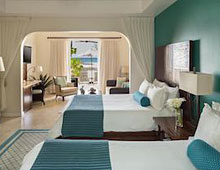 Hotel
Hotel 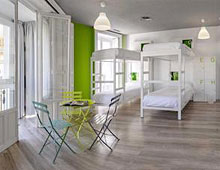 Budget accommodations
 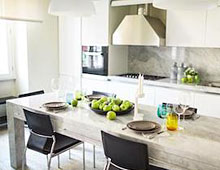 Apartments
 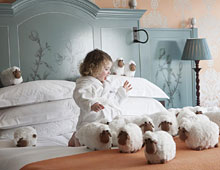 Family Hotel
  Luxury Hotel
  Resorts