Agriturismo Olmo
Sondrio - Via Ponchiera 500
Book now

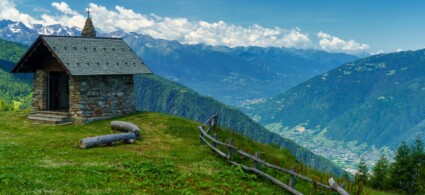
Small yet utterly charming, Sondrio is a town in Valtellina that captivates every visitor with its stunning landscapes, excellent cuisine and fine wines. This gem of the Lombard Alps is where mountains meet terraced vineyards, creating a truly wonderful vista.
Its intimate historic centre is ideal for those seeking a relaxing and peaceful stay, whilst the surrounding territory appeals to outdoor enthusiasts. Numerous hiking trails allow you to explore both the Rhaetic and Orobian Alps, whilst cyclists can tackle various routes including Sentiero Valtellina, Sentiero Rusca and Via dei Terrazzamenti.
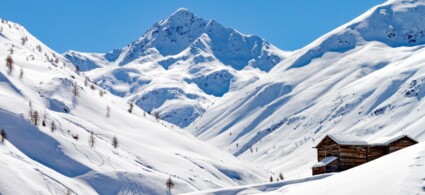
In summer the town is surrounded by lush greenery, whilst winter brings snow-capped peaks, making it a perfect destination year-round. Just two hours’ drive from Milan, Sondrio wins hearts not only through its historical heritage and natural beauty but also its exceptional food and wine traditions.
The historic centre of Sondrio is genuinely human-scaled and easily explored on foot, letting the town’s tranquility and unhurried pace work their magic.
Though it lacks internationally renowned attractions, a wander through the town centre is genuinely a step back in time. Here you’ll find grand palaces, historic churches and ancient wooden stüe rooms.
The heart of the town is the splendid Piazza Garibaldi, created in the 19th century by the Habsburgs. Previously known as Piazza del Monumento and then Piazza Nuova, it now features a bronze monument to Giuseppe Garibaldi, sculpted by Confalonieri in 1909. Historic buildings overlook the square, including the Teatro Sociale, designed in neoclassical style modelled on La Scala, Casa Lambertenghi (1826) and Palazzo Martinengo.
Dating from the 12th century, the Chiesa dei Santi Gervasio e Protasio was rebuilt in the 18th century but remains one of Valtellina’s oldest churches.
The building now features a single nave with an apse, whilst the façade, completed in the 19th century, is in neoclassical style. Inside you’ll find outstanding works by Pietro Ligari, an artist from an illustrious family of Valtellina painters from the 17th-18th centuries.
Castel Masegra is believed to have been built around 1041 as a defensive fortress. Over time it lost its original purpose and was converted into a court residence owned by various families including the de’ Capitani, Guicciardi and Beccaria. This new role led to the castle being embellished with frescoes and decorations.
Today you can admire a room frescoed with court life scenes and a cycle of frescoes inspired by Ariosto’s Orlando Furioso. Inside the fortress is also the CAST Museum (Castello delle Storie di Montagna), which explores not only Valtellina’s mountain history and culture but also climbing, mountaineering and the environment.
For a genuine journey back in time, visit Via Scarpatetti, where you can breathe in the ancient rural atmosphere. Here, among stone houses, tiny chapels, wooden balconies and cobbled streets, you’ll experience the rural character typical of Valtellina.
Don’t miss the Cappella della Madonna dell’Uva, which houses a wooden statue of the Madonna and Child holding a bunch of grapes—a wonderful testament to Valtellina’s ancient connection with grape cultivation.
Wooden stüe rooms are part of Valtellina’s architectural tradition and were ancient rooms completely clad in wood. The stua was found in all Valtellina homes and was the only heated room, warmed by a majolica stove.
Here families gathered and guests were received. Several wooden stüe rooms remain in Sondrio’s palaces and houses. You can visit the one in Palazzo Pretorio, the 17th-century stua in Palazzo Sassi de’ Lavizzari and the one in Villa Quadrio.
Palazzo Pretorio, or Palazzo della Ragione, now houses the town hall but was once home to the Valtellina Pellegrini family. From the 16th century it served various purposes as a government seat, governor’s residence and courthouse.
The interior rooms are definitely worth visiting, as they’re painstakingly frescoed. Notable works include a representation of Justice by Cesare Ligari. Be sure to see the Rigamonti stua, a room with finely carved and inlaid wooden ceilings. The interior features a courtyard with a portico and a two-storey loggia.
Palazzo Sertoli, located in Piazza Quadrivio, is a complex of 17th and 18th-century structures arranged around a noble courtyard, rustic courtyard and formal garden. Don’t miss the “Salone dei Balli” on the piano nobile. This rococo-style hall is decorated with stuccos and exquisite painted ornaments.
The Museo Valtellinese di Storia ed Arte (MVSA) is housed in Palazzo Sassi de’Lavizzari in the historic centre. Six sections (Archaeology, Sacred Art, Collections, Ligari, 20th Century, History) tell the story of Sondrio and all Valtellina.
Visitors can admire archaeological finds spanning from prehistory to the medieval period and learn about important figures in Sondrio’s history.
The Via dei Terrazzamenti is a 70-km hiking route connecting Morbegno to Tirano via Sondrio. Named after the vineyard terraces along the way, you can choose from Sondrio to head towards either Morbegno or Tirano; both routes are immersed in nature and pass through ancient villages. Around 40 rest areas dot the trail.
Staying in Sondrio isn’t the most common choice, but it’s a valid option for those seeking tranquility or outdoor activities. The town offers various types of accommodation from hotels to B&Bs, self-catering apartments and camper facilities. In the town centre you’ll find several hotels, whilst the surrounding countryside offers more B&Bs and farm stays.
Sondrio is accessible by car or train from major Lombard cities. Those driving from Milan or Bergamo should take the SS36 del Lago di Como e dello Spluga, then the SS38 dello Stelvio to the Sondrio exit. From Trento, take the SS42 followed by the SS38.
The town has a railway station with connections to many Lombardy towns including Milan, Lecco, Colico, Morbegno and Tirano. Public buses connect it to local destinations such as Chiavenna, Madesimo, Morbegno, Valmalenco, Tirano, Bormio and Livigno. The nearest airports are Milan Malpensa (around 150 km away), Milan Linate (135 km) and Bergamo Orio al Serio (120 km).
What's the weather at Sondrio? Below are the temperatures and the weather forecast at Sondrio for the next few days.




 Hotel
Hotel  Budget accommodations
  Apartments
  Family Hotel
  Luxury Hotel
  Resorts