Hotel Del Parco
Vigevano - Corso Milano 95
Book now

Orderly and well-maintained, Vigevano is a town in the province of Pavia renowned as a centre of national industrial importance. This territory was for many years one of the world’s leading shoe manufacturing hubs. The city’s industrial character dates back to the medieval period when, under Sforza rule, Vigevano became a manufacturing centre famous for processing woollen and linen cloth. It was during this same era that the city reached its peak of splendour, becoming home to one of the ducal residences of both the Sforza and Visconti families.
The city’s industrialisation gained fresh momentum in the nineteenth century with the opening of a Peroni brewery and, subsequently in 1866, of the first industrial-scale shoe factory. From that point on, the territory became known as the “shoe capital” because thousands of shoes were produced here and exported worldwide. Although the footwear industry is no longer as dominant as it once was, Vigevano remains one of the most important centres for shoe production.
Today Vigevano is the principal town of the Lomellina and a destination that has succeeded in preserving truly exceptional architectural heritage. When visiting the city, you can also discover the history and traditions of an area with an illustrious past, one that saw not only the Visconti and Sforza families as protagonists but also artists such as Bramante and Leonardo.
From a small rural hamlet in the Lombardy countryside, Vigevano transformed between the fourteenth and sixteenth centuries into a second capital at the behest of the Dukes of Milan. Today the city’s beating heart is undoubtedly Piazza Ducale, considered one of the most important examples of Renaissance urban architecture in Lombardy. Besides housing the city Cathedral, the square serves as a gathering place for locals and hosts numerous bars, restaurants, boutiques and historic shops.
The Vigevano Cathedral, also known as the Cathedral of Sant’Ambrogio, was built around the sixteenth century to designs by Antonio da Lonate at the behest of Francesco II Sforza. The church was constructed on the site of an earlier religious building, traces of whose decorative elements remain.
In the nineteenth century the cathedral underwent restoration and numerous works, including the realisation of the high altar (1828-1830), executed by Alessandro Sanquirico. Inside, the religious building features three naves finely decorated by local painter Francesco Gonin.
But what you mustn’t miss is a visit to the Treasury Museum. Having become a bishopric in the sixteenth century, Vigevano received donations of numerous precious objects including chalices, liturgical vestments and manuscripts of great value. Among the most important is the liturgical vestment used in Milan on 26 May 1805 to crown Napoleon Bonaparte King of Italy.
The Visconti-Sforza Castle (or Palazzo Ducale) is located at the highest point of the city and comprises a complex of buildings extending over an area of more than two hectares. The oldest nucleus appears to date back to the tenth century, but it was only in the fifteenth century that the Castle was modified to become a residence of the Dukes of Milan, hence the name Palazzo Ducale.
Specifically, Bramante was called to court and expanded the keep on the eastern side, creating a hanging garden enclosed by two porticoed buildings. In the nineteenth century the castle underwent more substantial modifications, transitioning from a noble residence back to a primarily military role. Currently the Castle hosts several museum sites including the National Archaeological Museum of the Lomellina, located in the “third stable” area, the Pietro Bertolini International Shoe Museum, the Leonardiana and the Picture Gallery.
The Shoe Museum dedicated to “Pietro Bertolini” is a site entirely devoted to the history and evolution of footwear. Vigevano is known worldwide as an important shoe production centre, having had the first industrial-scale shoe factory opened here in the mid-nineteenth century.
Currently at this Museum you can discover the history of the footwear sector and how it became deeply interwoven with Vigevano’s own story. One section is dedicated to the evolution of the shoe as an object of fashion and design.
Within Palazzo Ducale stands the famous “Bramante Tower“, a tower whose origins appear to date back to the twelfth century but which was redesigned in the fifteenth century. With the arrival of Ludovico il Moro in the city, not only was the castle renovated but the Tower was also rebuilt by Bramante with elegant and soaring Renaissance forms.
The building boasts seven storeys plus a cupola, but only the first four storeys are open to the public, leading to a panoramic terrace that offers stunning views across all of Vigevano. Over the years the Tower has become a symbol of the city and marks the passing of the day with its clock and bell tolls.
The Leonardiana is a new museum site created within Vigevano Castle. Here, through a specially designed route, you can retrace the life and work of the great master Leonardo da Vinci, who spent an extended period in Vigevano.
Within this unique Museum you’ll find not only reconstructions of the drawings, notebooks and works created by Leonardo but also 26 paintings attributed to his hand and reproduced at full scale using special high-resolution techniques. This stop is ideal for both adults and children!
Piazza Ducale is the true heart of the city and one of Italy’s most famous squares for its long history. Commissioned by Ludovico il Moro in 1492, it was Leonardo da Vinci who designed it, though it has undergone changes over time.
The square represents one of the finest urban planning works in Renaissance style and was created with the intention of realising the famous “ideal city” so desired by Ludovico il Moro.
Today Piazza Ducale is enclosed on three sides by buildings whilst the fourth side is occupied by the Vigevano Cathedral. The cobbled paving dates back to the mid-nineteenth century, as does the paving of the arcades, which was originally laid in a herringbone brick pattern.
The “Covered Road” of Vigevano represents one of the most important works of medieval military engineering. The road was built in 1347 by Luchino Visconti to allow the lords of Milan to enter and leave the Castle in great secrecy as well as serving as an escape route in case of danger.
The road is 167 metres long and 7 metres wide and has remained intact to the present day. In the twentieth century this road was then used by the military for goods transport. The Road has been restored and, in addition to still being passable, currently hosts exhibitions and events.
Vigevano is in a strategic location not far from more famous destinations such as Milan, Novara and Pavia, which is why the city is often chosen as a base for a stay in Lombardy. Quieter, more economical and well connected to the rest of the region, Vigevano also offers a wide range of accommodation.
The city has numerous hotels, guest houses and B&Bs, especially in the historic centre area, which allow you to easily reach the main sites of interest and all services.
Vigevano can be easily reached by both car and public transport. Those travelling by car from Milan should first take the Western Ring Road and then head onto the SP ex SS 494 towards Vigevano-Abbiategrasso; alternatively you can take the Milan–Genoa Motorway to the Gropello Cairoli exit and then the SP206 towards Vigevano. From Novara the city is reached by travelling along the SP11R and SP4, whilst from Pavia via the Provincial Road ex State Road 596.
The city also has a railway station with connections to the main towns of Lombardy and Piedmont such as Milan, Abbiategrasso, Alessandria and Mortara. The nearest airports, meanwhile, are Milan Malpensa about 48 km away and Linate approximately 54 km distant.
What's the weather at Vigevano? Below are the temperatures and the weather forecast at Vigevano for the next few days.
Vigevano is a municipality in Lombardy situated on the right bank of the River Ticino in north-eastern Lomellina. The town lies approximately 38 km from Pavia, 50 km from central Milan and 28 km from Novara.


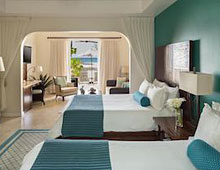 Hotel
Hotel 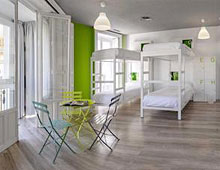 Budget accommodations
 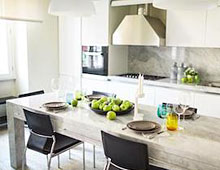 Apartments
 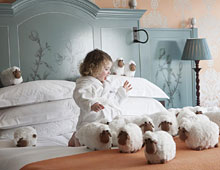 Family Hotel
 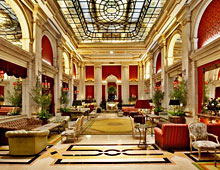 Luxury Hotel
  Resorts