UniHo Hostel
Pavia - 15 Via Lombroso
Book now

Pavia is a small and welcoming town situated just south of Milan, nestled along the banks of the Ticino river. Famous for rice production and excellent wines, Pavia is a charming, human-scaled town that nonetheless harbours numerous sites of interest.
Pavia was first established by the Gauls and then, thanks to its location on the Via Francigena, became an important Roman “municipium” known as Ticinum. During the Middle Ages, the city was, together with Ravenna and Verona, one of the royal seats of the Ostrogothic kingdom and subsequently became the capital of the Lombard Kingdom.
Conquered by Charlemagne, Pavia was proclaimed capital of the Italian Kingdom and here not only the Royal Palace, the supreme court and the mint were located, but in the church of San Michele Maggiore the Kings of Italy were crowned. In the 14th century, the city came under the rule of the Visconti and from that moment Pavia assumed an important role, alongside Milan, as the seat of the court and principal governmental bodies. It was precisely during this period that landmarks such as the Certosa and the University of Pavia were created, which over the years has hosted illustrious students and teachers.
Today Pavia is a true gem that has managed to preserve much of its historical heritage, bearing witness to the various rulers who have succeeded one another over time. Less chaotic than major cities such as Milan, Pavia is often overlooked on typical tours of the region, yet it is genuinely a destination worth discovering.
Small, hospitable and rich in sites of interest, Pavia’s historic centre has managed to preserve its Roman layout with two main axes: the cardo, corresponding to today’s Strada Nuova, and the decumano, corresponding to today’s Corso Cavour. The heart of the city is Piazza Vittoria, also known as Piazza Grande, which was created by the Visconti on the site where the ancient Roman forum once stood. Here you will find the Broletto, the building that once housed the city assemblies. The historic centre, since Roman times, has always been surrounded by city walls that have been restructured and expanded over the centuries.
The Cathedral of Pavia, dedicated to Santa Maria Assunta and Santo Stefano (protomartyr), was built on the site of ancient Romanesque cathedrals, whose remains are still visible at crypt level. Construction of this church began around the 11th century and continued until the 19th century. Once alongside the Cathedral stood the Civic Tower, built in the 14th century but collapsed in 1989, causing casualties and injuries, and has not been rebuilt since.
The church has a Greek cross plan and boasts three naves with the side ones flanked by semicircular chapels. The central dome, whose design is attributed to Bramante, has an octagonal plan and is said to be inspired by the dome of the Cathedral of Santa Maria del Fiore in Florence. In the apse basin is a silver and crystal reliquary that houses the Holy Thorns from the Crown of Christ.
The Visconti Castle is a true fortified citadel that was built in 1360 by Galeazzo II Visconti. The fortress has a square plan with square corner towers and a moat all around the outer perimeter. Surrounding the complex was a hunting park, the Visconti Park, which originally extended for approximately ten kilometres, reaching as far as the Certosa of Pavia.
Currently inside the Castle are the Civic Museums of Pavia, which comprise the archaeological museum and Lombard hall, the Romanesque and Renaissance museum, the Malaspina Picture Gallery, the 17th-century museum, the 19th-century Collection, the Risorgimento museum and the modern art museum.

The Certosa of Pavia is very probably the most famous site in the city and is a religious complex comprising a sanctuary and monastery. The Certosa, located approximately 8 km outside the historic centre, was built in the 14th century by Giangaleazzo Visconti as a family mausoleum. Construction works lasted approximately fifty years and saw the involvement of great masters of the time such as Bernardo da Venezia, Giovanni Solari and his son Guiniforte.
Originally the Certosa was connected to the Visconti Castle by a park and its location was strategically significant as it lay midway between Milan, capital of the duchy, and Pavia, the second city in importance where the court was seated.
The church has a Latin cross plan divided into three naves covered by cross vaults. The materials used for construction are ashlar stone mixed with brick. Inside, in addition to frescoes of great value, you can admire the funerary monument of Gian Galeazzo Visconti and those of Ludovico il Moro and Beatrice d’Este.
The Church of San Pietro in Ciel d’Oro is another site of interest located outside the historic centre but easily reached on foot. The church is believed to have been commissioned in the 8th century by Lombard king Liutprand to house the relics of Saint Augustine. The religious building was later rebuilt in the 11th century in Romanesque-Lombard style.
Inside you can admire the Shrine of Saint Augustine, a marble work composed of 50 bas-reliefs and 95 statues housing the bones of Saint Augustine of Hippo. Here you will also find the tombs of Lombard king Liutprand and Roman senator Severinus Boethius, whose burial is also mentioned by Dante in the Divine Comedy.
The Basilica of San Michele Maggiore was originally built during the Lombard period but subsequently underwent various restructuring and reworking around the 12th century. The building is one of the most important masterpieces built in Romanesque-Lombard style and is the place where ceremonies and coronations took place, including the coronation of Frederick I Barbarossa in 1155.
Its façade was built in sandstone rather than terracotta, which is why it is considered very fragile. The Basilica has a Latin cross plan with three naves, galleries and a transept. Inside, the point where according to tradition the coronation of King Barbarossa took place is marked by five circles of black marble; on the walls there are several works by Guglielmo Caccia. Under the presbytery is a crypt divided into three naves, housing a small marble statue of the Madonna and Child most likely created between the 13th and 14th centuries.
The Church of San Teodoro dates back to the 12th century and was built on the site of a pre-existing church dedicated to Sant’Agnese. The religious building has a late Romanesque layout with three naves each having three bays.
Inside it houses frescoes narrating the Stories of Sant’Agnese and San Teodoro and two important paintings by Bernardino Lanzani depicting 16th-century views of Pavia. In front of the crypt is a polychrome marble statue of San Teodoro dating from the 14th century.

Another must-see stop in Pavia is a stroll along the Ticino river, which divides the city into two: on one side the historic centre, on the other the Borgo Ticino.
Since Roman times, the two areas of Pavia have been connected by a bridge that was initially made of wood and later constructed in stone. Now the so-called Ponte Coperto is a crossing approximately 200 metres long with five arches and is, as the name suggests, entirely covered.
Crossing the bridge you can visit Borgo Ticino, a truly charming and peaceful area that features coloured houses and narrow cobbled streets. This part of the city was once home mainly to fishermen and washerwomen.
Overlooking the famous Piazza della Vittoria stands the Broletto of Pavia, a building originally constructed in the 12th century by San Damiano as a bishop’s residence. Subsequently, the Broletto was designated as the place where municipal assemblies would convene and justice would be administered.
The building was reworked several times over the centuries and only towards the end of the 15th century was the façade loggia constructed, articulated on two levels. During the fascist years, the Broletto was the seat of the National Fascist Party, whilst now it is the venue for exhibitions and displays.
The University of Pavia is considered not only the oldest in Lombardy but also one of the oldest in the world, having been founded in 1361 by the Visconti family. In the second half of the 18th century, thanks to Austrian sovereigns Maria Theresa and Joseph II, the University of Pavia enjoyed a period of great splendour and during those same years the Pavian School of Anatomy was also established.
Here renowned academics were called, such as Alessandro Volta, Lazzaro Spallanzani, Antonio Scarpa, Giuseppe Frank, Giovanni Antonio Scopoli, Samuel-Auguste Tissot, and thus the university became one of the most prestigious in Europe. Currently the complex is very large and is characterised by buildings with cloisters, courtyards and a beautiful botanical garden.
Pavia was once known as “the city of a hundred towers”, because here there were numerous tower structures built adjacent to the palaces of the country’s noble families. These constructions had no specific function but were mostly symbols of wealth and power.
The first towers were erected around the 12th century and were tall with square floor plans. About sixty of the original towers are now integrated into adjoining buildings, whilst six remain intact. The most beautiful are the Towers of the University and the Tower of Maino.
In the following map you can see the location of the main places of interest mentioned in this article.
Pavia’s centre, as mentioned, is rather compact, therefore the choice of neighbourhood or street where to stay is not important, as within a short time you can reach every part of the city on foot (except the Certosa). Pavia offers numerous accommodation options in the city catering to different types of visitors: from luxury hotels to apartments, from welcoming B&Bs to hostels. Prices for accommodation here are certainly lower than those found in the Lombard capital, so Pavia is often chosen as a base for exploring this area of Lombardy.
Pavia can be easily reached both by car and train from the main Lombard towns. Those travelling by car coming from the east (for example from Verona or Venice) can take the A4 first and then the A35. Those coming from Turin should take the A21 first towards Piacenza and then the A7 towards Milan until the Bereguardo-Pavia Nord exit. From Genoa, instead, you need to take the A7 towards Milan until the Bereguardo-Pavia Nord toll booth.
The city also has a railway station served by Trenitalia and Trenord, which provides connections to towns such as Milan, Lodi, Vigevano, Mantua and Reggio Emilia. High-speed trains, meanwhile, allow you to reach Bologna, Rome, Naples and Lecce. From Pavia station there are also connections to southern France, particularly to Monte Carlo, Nice, Antibes, Cannes and Marseille.
Milan Linate Airport is approximately 55 km away, whilst Malpensa is 85 km away. From both airports you first need to reach Milan Centrale station and then once there take a train to Pavia.
What's the weather at Pavia? Below are the temperatures and the weather forecast at Pavia for the next few days.
Pavia is a charming town in south-western Lombardy, nestled along the banks of the River Ticino. The town lies approximately 46 km from Milan, 35 km from Lodi and 100 km from Bergamo. Pavia is the closest Lombard town to the renowned Serravalle Designer Outlet, which is 70 km away.


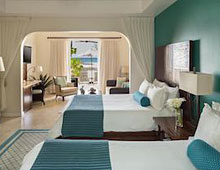 Hotel
Hotel 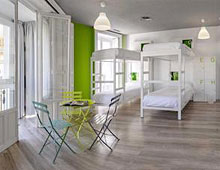 Budget accommodations
 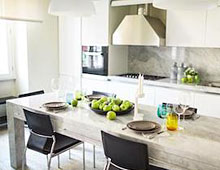 Apartments
  Family Hotel
 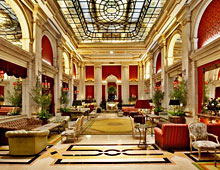 Luxury Hotel
  Resorts