Hotel Royal Falcone
Monza - Corso Milano 5
Book now

Monza is an elegant inland Lombard town boasting a truly unique historical and architectural heritage. Considered the third largest municipality in Lombardy by population, after Milan and Brescia, Monza is a city with an incredibly ancient history, having been inhabited even before the Roman period.
Although the city was regarded as an important road hub connecting Milan, Como and Bergamo, Monza was primarily an agricultural settlement. A more prosperous period dates back to the seventh century when the city was chosen as the summer capital of the Lombard Kingdom. Here, Queen Theodolinda had not only a sumptuous royal palace built (destroyed around the thirteenth century) but also a place of worship, considered to be the first Basilica of San Giovanni Battista.
Compared to other towns in Lombardy, Monza remains an underrated destination, yet the city is full of sites of interest and monuments that tell much about the history of these territories. Being very close to Milan, Monza can be discovered in a day trip from the Lombard capital or, better still, over a pleasant weekend.
Monza’s main points of interest are concentrated in its historic centre, which is not very large and easy to navigate on foot, with the exception of the Royal Park of Monza, for which you’ll need to travel by car or public transport.
Beyond Piazza Duomo, you mustn’t miss a visit to the central Piazza Trento e Trieste, which since medieval times has been the site of the city market. Today it is home to important buildings such as the Town Hall and the Monument to the Fallen of the First World War.

The Royal Palace or Villa Reale of Monza was built in the eighteenth century during the Austrian occupation by architect Giuseppe Piermarini, a pupil of Vanvitelli who also worked on the Teatro alla Scala in Milan. The palace had been commissioned by Empress Maria Theresa of Austria for her son Archduke Ferdinand, who was Governor of Milan at the time. This was to be the summer residence of the family to escape the city’s hot summer days and to go hunting. Built in neoclassical style, echoing the model of Lombard villas, the palace boasts almost seven hundred rooms.
The complex consists of a central body with two lateral wings at right angles. Within the palace, visitors can tour the Royal Apartments, the reception halls on the First Noble Floor and the private apartments on the Second Noble Floor. These still contain the furnishings of Umberto I and his wife Margherita of Savoy, who were the last reigning sovereigns to reside there. Surrounding the Villa are the Royal Gardens, which extend over an area of approximately 40 hectares.
Located in the eponymous piazza, in the heart of the city’s historic centre, Monza Cathedral was originally built in the sixth century by Queen Theodolinda as a chapel dedicated to San Giovanni Battista. The building we can admire today, however, is the result of a reconstruction that took place in the fourteenth century.
The interior of the church is finely decorated and preserves numerous treasures, frescoes and objects of great value. Among the most important treasures is the Iron Crown, said to contain one of the nails used during the crucifixion of Christ. Within the church lies buried Queen Theodolinda herself, in Theodolinda’s Chapel. Next to the church stands the Bell Tower, erected in the seventeenth century, which at approximately 80 metres high is the tallest building in the city.
The Museum and Treasury of Monza Cathedral houses an invaluable collection of rare and precious objects and relics that allow you to discover the history of this territory and the various rulers who succeeded one another over the centuries.
The exhibition route traces almost 1400 years of history of this city and its political and religious institutions. The tour starts from the “little dead cloister” or “little cemetery”, a place used for centuries as a burial ground, then continues along a route that begins with the Lombard period and extends to modern times.
The Arengario is the ancient town hall of Monza, built in the thirteenth century by the podestà of the time. As the podestà had been excommunicated and could no longer hold his assemblies under the portico in front of the Cathedral as was customary, he had a new site built.
Shortly after its construction, the building was joined by a bell tower with a square floor plan, approximately 27 metres high. The palace is currently used for exhibitions, shows and events, while markets and small fairs are organised under its arcades.
San Gerardo Church is, after the Cathedral, the most important religious building in the city of Monza and is dedicated to San Gerardo dei Tintori, co-patron along with San Giovanni Battista. It is said in the city that beneath the church lie the remains of the saint, buried there along with his mantle and other personal belongings; for this reason the church is also called “San Gerardo al corpo”. The religious building appears to have been constructed in 1835 on the remains of a previous church dedicated to Sant’Ambrogio, of which the apse and main altar still remain.
The Civic Museums of Monza are housed within the Casa degli Umiliati, a building constructed by the religious order of the Umiliati, which was characterised by a way of life based on sobriety and poverty. The medieval complex has undergone alterations and rebuilding over the years and now houses the city’s museums.
Over 140 pieces are preserved here from art collections spanning historical periods from the Palaeolithic to the 1950s. Among the most important works are paintings and sculptures by Monza artists of the nineteenth and twentieth centuries, as well as a collection of antique and modern prints that form part of the Print Cabinet.

The Park of Monza extends over an area of approximately 688 hectares across the municipalities of Monza, Lesmo, Villasanta, Vedano al Lambro and Biassono. Together with the Royal Gardens, the Park of Monza and the Royal Villa, the Park represents a complex of great value not only historically and architecturally but also from a landscape perspective.
The Park of Monza was commissioned in the early nineteenth century by Emperor Napoleon Bonaparte to make it an agricultural estate and hunting reserve for Viceroy Eugène de Beauharnais, who at the time lived at the Royal Villa of Monza. The realisation of the Park was carried out by architect Luigi Canonica between 1806 and 1808.
Within it are preserved not only various species of flora and fauna but also buildings of great historical value, such as some farmhouses and mills. Within the park is also the famous Autodromo Nazionale di Monza, the historic venue of the Italian Grand Prix.
In the following map you can see the location of the main places of interest mentioned in this article.
The town of Monza boasts a good number of accommodation options in its historic centre. With its numerous sites of interest and the magnificent Park of Monza, dedicating two days to visiting the city is certainly the best choice to fully enjoy its beauty without rushing.
Also keep in mind that Monza can be chosen as a base from which to visit many nearby towns including Milan, Como and Lecco. In Monza, accommodation prices are certainly lower, the pace is more relaxed, and you are just 10 minutes by train from the Lombard capital.
Thanks to its position, Monza is easily reached by both car and train.
By car, from Milan you need to take the SS 36 towards Lake Como and Spluga until the Monza Centre exit. From Bergamo, you can travel along the A4 to the A52 exit towards Monza/Northern Ring Road.
The city also has a railway station that provides connections with the main Lombard towns including Milan, Como, Lecco and Bergamo. The nearest airports are Linate, approximately 18 km away, and Bergamo Orio al Serio, approximately 43 km away.
What's the weather at Monza? Below are the temperatures and the weather forecast at Monza for the next few days.
Monza is a captivating Lombardy town with a truly glorious past. The city lies 16 km from Milan, 41 km from Como and 40 km from Lecco.


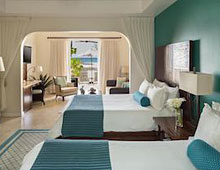 Hotel
Hotel 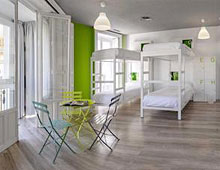 Budget accommodations
 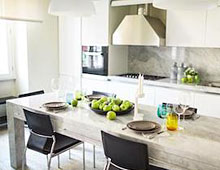 Apartments
 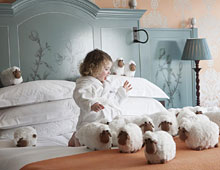 Family Hotel
  Luxury Hotel
  Resorts