Hotel Il Duca barbablu
Sabbioneta - Via della Stamperia 18
Book now

Sabbioneta is an elegant Lombard town that was built in the sixteenth century at the behest of Duke Vespasiano Gonzaga Colonna. Thanks to its historic and architectural heritage, the town is not only part of the circuit of Italy’s Most Beautiful Villages and has received the Orange Flag award from the Italian Touring Club, but has also been declared a UNESCO World Heritage Site alongside Mantua.
Since ancient Roman times, this territory has occupied a place of great strategic importance due to its location between the Po and Oglio rivers, along the route of the ancient Vitelliana road. In the sixteenth century, Vespasiano Gonzaga Colonna (1531-1591) made Sabbioneta the capital of a small state that was surrounded by important duchies.
To the west lay the Duchy of Milan, governed at the time by Spanish rule, while to the east lay the Duchy of Mantua, governed by the Gonzaga family, Vespasiano’s cousins. South of the Po was the Duchy of Parma and Piacenza, then ruled by the Farnese family, allies of the Gonzagas. In the sixteenth century, Sabbioneta had become a veritable fortress, characterised by an advanced defensive structure.
Vespasiano Gonzaga was indeed an admirer of the so-called “ideal city”, a Renaissance concept whereby the city’s urban design should reflect abstract criteria and principles of rationality and functionality. Vespasiano Gonzaga’s vision made Sabbioneta a village with a significant architectural and artistic heritage.
Today Sabbioneta is a destination not to be missed during a trip to discover Lombardy. Perfect for a quiet weekend or a day trip from Mantua, Sabbioneta is a place that has managed to preserve the charm of a Renaissance town and takes all its visitors on a genuine journey back in time.

Since the sixteenth century, Sabbioneta has been surrounded by a mighty city wall that has come down to us almost intact, with the exception of two stretches demolished in the twentieth century. The two gates providing access to the city, Porta Vittoria and Porta Imperiale, have also been preserved.
The city contains within its walls sites of great historical and architectural interest. Piazza d’Armi and Piazza Ducale are the two main squares around which the most significant buildings were constructed.
The Palazzo Ducale or Palazzo Grande was built around the mid-sixteenth century by Vespasiano Gonzaga, who wanted a new complex to serve as his residence and as the seat of political and administrative activities. The palace overlooks Piazza Ducale and features a façade with a portico of five arched openings in rusticated stone. The noble floor contains rooms of considerable value with elegant decorations and frescoes created by Fornaretto Mantovano, Bernardino Campi, Alberto Cavalli and Giulio Rubone.
Among the highlights not to be missed are the Gallery of Ancestors, where you will find a genealogical tree of the Gonzaga family, and the Hall of Eagles with the wooden equestrian statues of Vespasiano and other family members. Upon the duke’s death in 1591, the palace and its collections were inherited by his daughter Isabella Gonzaga.
The Galleria degli Antichi, also known as the Corridor Grande, was built between 1584 and 1586 at the behest of Sabbioneta’s duke, Vespasiano Gonzaga, as a place to house his collection of ancient marbles and hunting trophies. The gallery is connected to the Palazzo del Giardino by the Corridor Piccolo and was built in terracotta in the form of a portico.
The frescoed decorations of the walls were created in 1587 by Giovanni and Alessandro Alberti and some of their collaborators. The wooden coffered ceiling was once painted blue, whilst the floor was originally paved with terracotta tiles. The duke’s collection of marbles remained here until the eighteenth century, when the Austrians transferred it to Mantua, where it is now housed between the Palazzo Ducale and Palazzo di San Sebastiano.
The “Casino”, commonly known as Palazzo Giardino, is a building constructed between the Galleria and the “Corridor Piccolo” to serve as the duke’s private residence and a place for moments of leisure. Construction work began before 1580 and was completed in May 1588. The interior was decorated between 1582 and 1587 by various artists coordinated by Bernardino Campi.
Among the most finely finished rooms is the Camera dei Miti, painted with mythological scenes by Bernardino Campi, the Camerino di Enea, considered the duke’s study, the Corridoio di Orfeo, with paintings by Carlo Urbino. The largest room in the Palace is the Sala degli Specchi, which appears to have been painted by the painter Jan Soens with scenes of Roman life and landscapes.
The Chiesa della Beata Vergine Incoronata was built between 1586 and 1588 on the remains of the ancient churches of San Biagio and San Niccolò. The religious building has an octagonal floor plan with eighteenth-century interior decorations created by pupils of the school of Antonio Galli da Bibbiena.
What is most fascinating about its interior, however, is the chapel to the left of the main altar, where you will find the Mausoleum of Vespasiano I Gonzaga, the duke’s funerary monument. Built around 1592 in polychrome marble by sculptor Giovan Battista Della Porta, the mausoleum also houses a large bronze statue of the duke created by sculptor Leone Leoni.
The Teatro all’Antica was built around 1588 and is considered one of the first examples of a modern theatre building. To build the Theatre, Vespasiano I Gonzaga called upon the Vicenza-based architect Vincenzo Scamozzi, who had already completed the famous Teatro Olimpico in Vicenza, succeeding Andrea Palladio who died in 1580.
Scamozzi created a theatre with an elegant structure divided into two storeys by a cornice featuring a Latin inscription that praises both Rome and classicism as an inspirational model. The stage once featured a fixed scene with a monocular perspective image of a city. Unfortunately, the scenery has been destroyed and can now be observed only through sketches and drawings made by Scamozzi at the time, which are now preserved in Florence.
The Chiesa di Santa Maria Assunta was built in the sixteenth century by Vespasiano I Gonzaga as it also formed part of his plan to build the ideal city according to Renaissance canons. The work was carried out by local architect Pietro Martire Pesenti.
Inside, the Church features a single nave with a barrel vault ceiling and preserves works of considerable value, including a copy of the canvas of the Madonna of Divine Love by Raphael. Among the other works you can admire paintings by Antonio Bresciani and Gaetano Ghidetti and a sacred Thorn from the Crown of Jesus Christ.
If you are looking for accommodation to stay in Sabbioneta, the most suitable area of the town is certainly the historic centre where the main places of interest are located. Here you can find not only hotels but also welcoming bed and breakfasts and apartments.
Given its location, Sabbioneta is reachable by car from the major cities of northern Italy. Those coming from Milan should travel first along the A1, then on the A21 until the Cremona exit; from here you will need to take the SP87 and SP420 towards Sabbioneta. The town is also easily reached from Parma by travelling along the SP343R and SP420.
Those wishing to reach the town by public transport can use buses from the Apam company, which connect Sabbioneta to several towns in the area, including Mantua. The UNESCO Mantua – Sabbioneta line also operates with Mantua.
The main railway stations are those at Mantua and Parma. The nearest airports are Parma, about 30 km away, Verona about 70 km away, and Bergamo Orio al Serio, 130 km away.
What's the weather at Sabbioneta? Below are the temperatures and the weather forecast at Sabbioneta for the next few days.


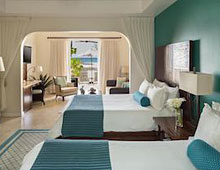 Hotel
Hotel 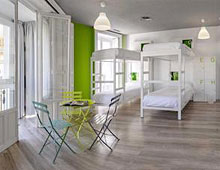 Budget accommodations
 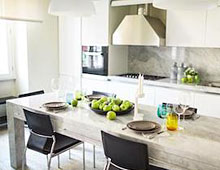 Apartments
  Family Hotel
 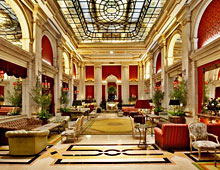 Luxury Hotel
  Resorts