LVG Hotel Collection
Verbania - Via Fratelli Cervi 14
Book now

Verbania is a Piedmontese city that sits on a triangular promontory along the western shore of Lake Maggiore. Known as “the garden on Lake Maggiore”, the city is a natural terrace overlooking the Gulf of Borromeo. The origin of its name dates back to ancient Roman times when Lake Maggiore was known as “Verbanus Lacus” and Verbania was already one of the most important settlements in the area.
The city’s territory is remarkably diverse and boasts an extensive area that stretches along the lake shore with the settlements of Pallanza, Suna and Intra, whilst further north lies the hamlet of Trobaso. Moving inland, you’ll encounter a hilly zone that is home to the hamlets of Zoverallo, Antoliva and Biganzolo. Venturing even further from the lake, you’ll find a mountainous belt where Monte Zeda, Monte Rosso, Pizzo Marona and the Parco Nazionale della Val Grande are located.
From the nineteenth century onwards, Verbania began to develop not only as an important industrial centre but also as a highly sought-after tourist destination. Alongside the opening of spinning, weaving, dyeing, paper and hat factories in the mid-nineteenth century, the construction of villas with gardens also began, and subsequently the coastal road was built. Thus, Lake Maggiore became a destination frequented by both artists and noble families of the era who particularly appreciated the tranquillity and beauty of these territories.
Today, the gardens, villas and parks of Verbania are among the main attractions of the city and make a stay here ideal for those wanting to combine the relaxation of a holiday with the beauty of the surrounding landscapes.

The city of Verbania was born from the union of several small settlements, among which Intra and Pallanza are undoubtedly the oldest nuclei in the area. The city centre is neat and well-organised but not overlooking the lake. It is Intra that is the most famous area in the zone, as it sits right along the shores of the lake and also hosts the ferry terminal that connects the various Verbano locations. Its heart is Piazza Mazzini, on the waterfront, which thanks to its numerous bars and restaurants is considered a meeting place for locals and tourists alike. Besides Intra, Pallanza also overlooks Lake Maggiore and preserves sites of great interest such as Palazzo Viani – Dugnani (now home to the Museum of Landscape) and the Church of Madonna di Campagna.
A must-visit during a trip to Verbania is certainly its hamlet of Intra. The name Intra derives from the Latin “intra flumenes” because the settlement lies between the mouths of the San Bernardino and San Giovanni streams. The locality has managed to preserve its small medieval historic village whilst among its narrow streets stand numerous Baroque and Neoclassical palaces. Not to be missed is a stroll along the pedestrian waterfront which is surrounded by chestnuts, oleanders, magnolias and conifers and features both the old and new harbours. It is from here that connections depart to the Lombard city of Laveno.
The Basilica of San Vittore is located in the heart of Intra’s historic centre and was built on the site where a religious building dating from the 5th century previously stood. The church is dedicated to San Vittore, a Roman soldier martyred for his Christian faith, who is considered the patron saint of the city. In the nineteenth century, a new bell tower was erected containing eight bells cast by the “Pasquale Mazzola” foundry of Valduggia. Inside is an imposing eighteenth-century organ and a youthful painting by Daniele Ranzoni.
The Church of Madonna di Campagna was designed in the sixteenth century by Giovanni Beretta da Brissago in place of an earlier Romanesque building, of which only the bell tower remains. The building is located in the Pallanza hamlet.
Considered a national monument, the church features Renaissance style with three naves and an octagonal drum. Inside the dome are frescoes from the mid-sixteenth century, whilst the chapel dedicated to Madonna delle Grazie houses a fifteenth-century fresco and paintings by Camillo Procaccini.
Palazzo Viani – Dugnani is a seventeenth-century Baroque building located in Pallanza and is currently home to the Museum of Landscape. The complex was originally built by the Viani family, but when the last owner, Teresa Viani, married the Marquess Giulio Dugnani, her husband’s surname was also added to the palazzo.
By the mid-nineteenth century, the building had become a meeting place for many writers and artists such as Alessandro Manzoni, Ruggero Bonghi and Giovanni Berchet. Currently, as home to the Museum of Landscape, it houses fifteenth-century frescoes and paintings of Lombard and Piedmontese origin dating from the fifteenth to the twentieth century. Inside is also a plaster cast collection featuring works by Impressionist sculptor Paolo Troubetzkoy and an area dedicated to archaeology.
Villa Taranto is one of Verbania’s most beautiful residences, located in the Pallanza hamlet right along the shores of Lake Maggiore. Today the building houses the prefecture of Verbania and is not open to the public, however surrounding the villa is a splendid botanical garden open to the public. Here you’ll find terraces, scenic fountains, waterfalls and over twenty thousand plant species.
The garden is divided into several areas such as greenhouses, terraced gardens, flower beds and herbaries. For its beauty, the villa’s garden is considered a true masterpiece of gardening art. Inside you can admire various plant varieties, among which stand out some exotic specimens and others rare such as the large Victoria cruziana water lilies, the Metasequoia glyptostroboides conifers and the Dicksonia antarctica ferns.
The small Isolino di San Giovanni also belongs to Verbania and is part of the archipelago of the Borromean Islands. The islet takes its name from an oratory located here that houses a baptismal font dedicated to St. John the Baptist.
Becoming property of the Borromeo family in 1632, the island hosts a beautiful palace surrounded by a park. The palace built here has been remodelled several times and its current appearance derives from work carried out in the nineteenth century. The island was also home to illustrious artists such as conductor Arturo Toscanini.
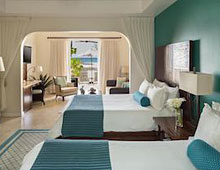
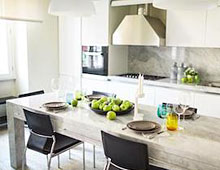
Verbania is a town that has developed in recent years an excellent range of accommodation facilities. It is particularly the localities of Intra and Pallanza that boast the greatest number of options. Here, you’ll find large hotels, welcoming bed & breakfasts as well as apartments. The most requested facilities are those located on the waterfront and offer magnificent views of Lake Maggiore.
The solutions in these localities are the most sought-after (especially during the summer season) but also the most expensive. Heading inland, further from the lake, you can find excellent accommodation at lower prices.
Verbania can be easily reached by car or by water. From Milan, travelling by car, you can first take the A8 and then the A26 until the Baveno-Stresa exit. From there you can then travel along the State Road 34 of Lake Maggiore. State Road 34 of Lake Maggiore runs along the entire lake, starting from the south and continuing towards the Swiss border, and allows you to connect all the localities on the Piedmontese waterfront.
The best way to reach Verbania if you’re already at Lake Maggiore is certainly by water. Connections are active both with the city of Laveno (on the Lombard shore) and with other Piedmontese and Swiss cities.
Verbania also has the Verbania-Pallanza railway station which is located on the Domodossola-Milan line. However, the station is in a somewhat inconvenient location as it is situated near the Fondotoce hamlet, approximately 7 km from Pallanza. The nearest airport, on the other hand, is Milan Malpensa, which is about 65 km away.
What's the weather at Verbania? Below are the temperatures and the weather forecast at Verbania for the next few days.


 Hotel
Hotel 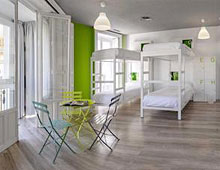 Budget accommodations
  Apartments
  Family Hotel
  Luxury Hotel
  Resorts