Hotel Villa Ruscello
Baveno - Via Sempione, 64
Book now

Blessed with a unique historical, architectural and natural heritage, the Borromean Islands are a must-visit destination on any Lake Maggiore adventure. The archipelago sits in the southwestern part of Lake Maggiore, which belongs to the Piedmont region. It comprises three islands (Isola Madre, Isola Bella, Isola dei Pescatori), one islet (Isolino di San Giovanni) and the Scoglio della Malghera. The three main islands and the rock outcrop fall within Stresa’s municipal territory, whilst the Isolino di San Giovanni belongs to Verbania.
The archipelago takes its name from the noble Borromeo family, who, though originally from Tuscany, wielded considerable influence over Milan and the Lake Maggiore region for centuries. The family became owners of the Borromean Islands around the 15th century, whereupon they began constructing villas with magnificent gardens, parks and numerous other works that transformed these territories into an ideal destination for their retreats. The islands’ beauty captivated not only Ernest Hemingway but also many European royals and nobility who fell under their spell.
The Borromean Islands archipelago is a true paradise waiting to be explored. Isola Bella and Isola Madre, along with the two Castelli di Cannero rocks, remain in the Borromeo family’s possession. Typically, from March to October the islands are accessible and can be visited as a day trip. Isola dei Pescatori, meanwhile, is the only island still permanently inhabited; it hosts a small village that must be explored entirely on foot, as well as some hotel facilities.

Isola Madre is the largest of the Borromean Islands, so much so that it was once called Isola Maggiore. The island is home to the majestic Palazzo Borromeo, erected in the 16th century on the remains of a church, surrounded by an elegant 8-hectare English garden.
Unlike the Palazzo Borromeo built on Isola Bella, the one on Isola Madre was designed as a more private family residence. The interiors are furnished with tapestries, furniture and paintings from various Borromeo family homes. Particularly noteworthy are the Reception Hall, the Hall of the Seasons, the Venetian Drawing Room with Murano glass mirrors and chandeliers, the Library and the Puppet Theatre.
Surrounding the complex is a magnificent English-style botanical park completed in the 19th century. Here you’ll find plants and flowers from distant locations that have thrived thanks to favourable temperatures. There’s also a Himalayan cypress, which arrived here in 1862 from the Himalayas via tiny seeds and has since become the island’s symbol.

Isola Bella, known until the 15th century as the Lower Island or “island below”, was initially a fishing village territory boasting two churches—one dedicated to San Rocca and the other to San Vittore. When the Visconti ceded Lake Maggiore territories to the Borromeo family as a fiefdom, Vitaliano I Borromeo was the first to conceive a project to build a magnificent palace on Isola Bella. However, it was only in 1632, thanks to Carlo III Borromeo, that construction of this grand complex began. The building works were entrusted to Milanese architect Angelo Crivelli, who also designed the gardens.
The project was subsequently continued and perfected by Vitaliano VI, who is considered the founder of Isola Bella. The Palazzo Borromeo is now regarded as the pinnacle of Baroque architecture. Inside, visitors can explore several reception rooms and the noble floor chambers. One of the most important areas is undoubtedly the Berthier Gallery, which houses over 130 paintings by great masters such as Raphael, Correggio, Titian and Guido Reni. Other spectacular rooms include the Throne Room, the Hall of Queens and the Tapestry Hall. Over the years, this Palace has hosted important figures such as Napoleon Bonaparte.
All around the Palace extends the Isola Bella garden, created between 1631 and 1671. The heart of the garden is undoubtedly the Teatro Massimo, featuring statues, obelisks and fountains adorning dramatic terraces crowned by a Unicorn statue, symbol of the Borromeo family. Scattered throughout are various rare plants and flowers including a centuries-old camphor tree, the Gunnera manicata, Olea Fragrans and Mexican pine. Since 2002, the gardens of both Isola Bella and Isola Madre have been included in the prestigious Royal Horticultural Society circuit.

Isola dei Pescatori is the only island in the archipelago to have remained in public hands and is also the sole one still inhabited. A small community of fishermen lives here, making it a truly evocative destination. Appreciated for its simplicity and tranquil atmosphere, Isola dei Pescatori is ideal if you’re seeking moments of peace. The village is entirely pedestrian—no vehicles are permitted—and its narrow streets are lined with small restaurants, bars and craft shops. Venturing away from the busier areas, you can still admire the characteristic fishermen’s houses with multiple storeys where fish is dried.
Isola dei Pescatori is the only habitable island among the Borromean Islands and is home to hotel facilities for those wishing to experience a truly special stay and explore the island without the crowds. Alternatively, you can stay in locations along the Lake’s shoreline, which offer easy access to the islands. Among the most popular towns along the Piedmont shore are Stresa and Arona, whilst on the Lombardy side there’s Angera.
The best way to reach the Borromean Islands is from the town of Stresa, which lies just 400 metres from Isola Bella. From Stresa, motorboats depart from the town jetty and call at all three islands. You can purchase a day ticket that allows you to use the various connections all day long. Additionally, ferries operate from Arona, Angera and Baveno, providing access to the archipelago. Those arriving by car at Stresa or Arona from Milan should first travel along the Autostrada dei Laghi A8 and then the A26 until the Carpugnino exit. Both Stresa and Arona have railway stations with connections to Milan.
The Borromean Islands are located in the southern part of Lake Maggiore. The archipelago belongs to the Piedmont region, with the islands and rocky outcrop falling within Stresa's municipal territory, whilst the islet of San Giovanni belongs to Verbania.


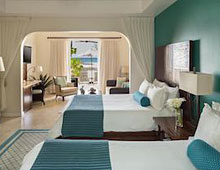 Hotel
Hotel 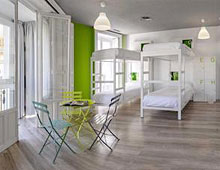 Budget accommodations
 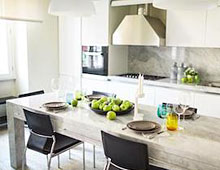 Apartments
  Family Hotel
  Luxury Hotel
  Resorts