Hotel Giardino
Arona - Corso della Repubblica 1
Book now

Arona is a small town in the province of Novara that sits on the Piedmont shore of Lake Maggiore. The town has remarkably ancient origins – in 1860, the first prehistoric pile-dwelling settlement discovered in Italy was identified here, dating back to the Bronze Age (18th to 13th century BC). This territory falls within the Lagoni di Mercurago natural park, which is part of the “prehistoric pile-dwelling settlements around the Alps” inscribed in 2011 on the UNESCO World Heritage list.
Dominating the town from above is the Rocca di Arona, a hilltop where remains of a pre-Roman fortification have been found. These discoveries demonstrate how well the town’s strategic location was understood thousands of years ago. Arona’s development was largely due to its position along the Strada Consolare Severiana Augusta, a major road connecting Mediolanum (modern-day Milan) first to Lake Maggiore and then onwards to the Simplon Pass.
The structure of the town centre we see today dates back to the 10th century, when the town developed around the Benedictine abbey of San Salvatore. Over the centuries, Arona was first part of the Duchy of Milan, then governed by the Borromeo family, and finally dominated by Spanish, Austrian and French rulers.
In 1855, with the opening of the railway line to Novara and the establishment of numerous hospitality facilities, Arona became a highly sought-after tourist destination, appreciated for its splendid historical and natural heritage. The town centre sits right on the shores of Lake Maggiore, surrounded by verdant rolling hillsides (known as “motti”) that slope gently down to the water’s edge.
The centre of Arona as we see it today is the result of expansion that took place during the Napoleonic era. In the 19th century, following the destruction of the Rocca Borromea, the town underwent urban expansion that saw the historic centre enlarged, along with the construction of a new port and railway station.
The Collegiata della Natività di Maria Vergine (Collegiate Church of the Nativity of the Virgin Mary) was built around 1468, though over the years it has undergone various restoration works that have altered parts of its appearance. The façade is made of limestone, whilst inside the church features three naves with cross vaults.
Of great artistic value is the polyptych “The Nativity” dating to 1510 and created by Gaudenzio Ferrari; alongside this, you can admire six canvases by Francesco Mazzucchelli, known as il Morazzone, donated by Cardinal Federico Borromeo. The church also houses four reliquaries containing the pallium, mitre and crosier of San Carlo Borromeo.
The Chiesa dei S.S. Martiri (Church of the Holy Martyrs), also called San Graziano, is named after the four Holy Martyrs it preserves – the patron saints of Arona: Graziano, Felino, Fedele and Carpoforo. The religious building dates back to the 10th century but has undergone various interventions that have altered its original structure.
The façade in Baroque style dates to 1572 and was commissioned by the Jesuits, whilst the interior is Gothic in style with a single nave of two bays and four side chapels.
Above the high altar, you can admire the altarpiece depicting the Madonna enthroned among angels and saints, created by Ambrogio da Fossano, known as il Bergognone. There are also masterpieces by Palma il Giovane and other artists of the Veronese school.
The Broletto, also known as Palazzo di Giustizia (Palace of Justice), was erected at the end of the 14th century in Lombard Gothic style on what was once known as Piazza del Mercato, now called Piazza del Popolo.
The building was constructed by the Visconti between the 14th and 15th centuries and has managed to preserve its original structure with a Gothic loggia featuring six arches.
Under the portico at ground level, you can still admire various terracotta medallions with portraits of nobles from the Visconti and Sforza families, who governed the city.
On the hilltop overlooking the town of Arona stand the remains of the ancient Rocca Borromea, the birthplace of San Carlo Borromeo on 2 October 1538. The earliest remains testifying to a fortress in this area date back to the pre-Roman period, though it was during the rule of the Visconti and Sforza that the fortification of the town and the construction of the Rocca began. During this same period, the first documented military port on the shores of Lake Maggiore was built in Arona.
The Colosso di San Carlo Borromeo is a statue nicknamed the Sancarlone, located on the Colle San Carlo, a site reachable on foot from Piazza del Popolo. The statue stands approximately 35 metres high (23.40 m for the statue itself plus 11.70 metres for the base) and was created between 1614 and 1697 using copper sheets by sculptors Siro Zanella from Pavia and Bernardo Falconi from Lugano.
It is currently possible to visit the interior of the statue by climbing narrow staircases that lead to the highest point in the head. Along the bust of the statue are small windows that allow you to enjoy a marvellous panoramic view of the surrounding territory.
The Arona waterfront promenade features both a pedestrian and a cycle path with benches for rest and green areas with children’s play areas. As you stroll, you can also see the large fountain and the embarkation point where boats depart for other Lake Maggiore destinations. From some sections, you can also admire the Lombard shore of the lake, particularly the medieval Rocca of Angera.
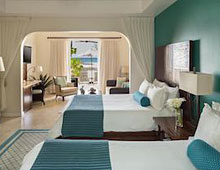
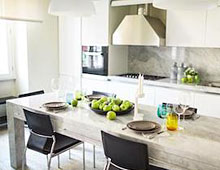
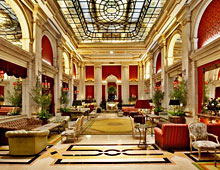
Despite being a relatively small town, Arona offers various types of accommodation. Visitors can stay in elegant 4-star hotels, welcoming B&Bs or agriturismos (farm stays). For those wanting greater freedom, there is also the option of renting apartments or aparthotels.
Arona is a town easily reached by car, boat or train.
By car from Milan, you need to first take the A8 motorway (Milan Lakes) towards Lake Maggiore and then the A26 Genova – Gravellona Toce until the Arona exit. From Novara, you travel along the SS32 towards Arona, whilst from Verbania simply take the SS Sempione 33.
Arona also has a railway station situated on the Domodossola-Milan and Arona–Novara lines, ensuring connections with many cities in both Lombardy and Piedmont. The nearest airport is Milan Malpensa, approximately 30 km from the town.
An alternative but very practical way to reach Arona is certainly by lake. The town is home to Navigazione Lago Maggiore and houses a large port where hydrofoils and ferries dock, connecting Arona to other Piedmont locations as well as the Lombard shore of Lake Maggiore.
What's the weather at Arona? Below are the temperatures and the weather forecast at Arona for the next few days.


 Hotel
Hotel 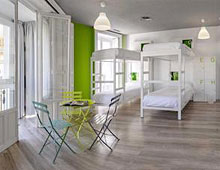 Budget accommodations
  Apartments
  Family Hotel
  Luxury Hotel
  Resorts