CallMe Crema
Crema - Via Suor Maria Crocefissa di Rosa
Book now

Surrounded by the Po Valley, Crema is a peaceful Lombardy town perfect for a weekend getaway or day trip. The city’s origins are uncertain, but what we do know is that Crema flourished during the 16th century under Venetian rule. During these years, the city enjoyed considerable autonomy, which made it possible to expand the town centre and construct numerous buildings of considerable merit.
Today Crema presents itself as a town with a well-organised historic centre, compact and characterised by elegant palaces, historic churches and monuments of great interest. It’s a much-appreciated destination for its tranquillity and human scale. The centre is pleasantly explored on foot and combines the charm of Romanesque-Lombard architecture with elegant Venetian echoes.
The heart of the city is Piazza Duomo, where the city’s original nucleus was founded and from where four main streets branch out, dividing Crema in two. Running north to south are Via Cavour and Via Matteotti, while east to west are Via Mazzini and Via XX Settembre. Following these latter two streets to their end leads to Porta Serio and Porta Ombriano, the only two entrances that have survived to the present day.
Crema’s Cathedral, also known as the Cathedral of Santa Maria Assunta, appears to date back to the 11th century. The church was most likely built on the site of a former Roman place of worship. Over the years, the building has undergone various alterations and extensions that have partially changed its appearance.
Currently the Cathedral features a barn-style facade divided into three sections by grand arches, housing a Romanesque-style portal and capitals decorated with plant motifs. At the centre stands a large Gothic rose window. Inside, the church has a three-nave layout, with the central nave ending in an apse while the side aisles are terminated by chapels. Here you can admire frescoes and works of considerable merit created between the 16th and 19th centuries.
Opposite the Cathedral stands the Palazzo Comunale, built in the 16th century as the city’s political centre. The Palace is a true masterpiece of architecture, combining Lombard and Venetian styles. Lombard features can be recognised in the use of terracotta brick, while Venetian elements appear in the loggia with three arches.
The ground floor is arcaded and divided from the first floor by a series of terracotta tiles. The second floor is characterised by windows alternating with marble coats of arms of Venetian families to which the podestà who governed the city belonged. On the western front of the Palace is set the Torrazzo tower.
The Arch of the Torrazzo, more simply known as the Torrazzo, asymmetrically divides the palazzo comunale and connects Piazza Duomo with Via XX Settembre. The gateway is in Renaissance style and appears to have been built in the late 15th century.
The Tower is divided into three storeys: the first contains the entrance arch, the second features a panel with the city’s coat of arms, and the third has a clock with statues of San Vittoriano and San Pantaleone on either side. On the outer side, in place of the clock, stands the statue of the Lion of St Mark.
The Palazzo Pretorio is also located in Piazza Duomo and was the residence of the Venetian podestà during the reign of the Serenissima. The building features a 16th-century-style facade that was later enriched with a classicising portal made of Botticino marble.
In the loggia beneath the arcade, you can admire a pantheon dedicated to the burial and memory of distinguished citizens of Crema. On the first floor, there are two halls: the Council Hall, with portraits of the main Venetian podestà, and the Reception Hall with a 16th-century coffered ceiling.
The Civic Museum of Crema is housed within the former convent of Sant’Agostino, which was founded in 1439. The complex boasts two Renaissance-style cloisters and a refectory finely frescoed in 1507 by painter Pietro da Cemmo. During French rule, the convent was converted into a barracks that first housed French soldiers, then Austrian ones and finally Italian ones.
After the Second World War, work was undertaken to modify the complex and turn it into a cultural centre and museum. Today it’s possible to visit the Civic Museum of Crema, which tells the story of these territories. In particular, the route is divided into four sections: archaeological, historical, artistic and musical.
Palazzo Benzoni-Frecavalli is a 17th-century building that currently houses Crema’s Library. The palace was built by the Benzoni family, one of the oldest and most influential families in the city. In the 18th century, ownership passed to the Frecavalli family and in the early 19th century the building was converted first into schools and then into a hospital.
The change in use brought various alterations to the original building, especially during the years it served as a health facility. The palazzo now centres on a quadrangular inner courtyard; fortunately, within the Palace there have survived rooms still richly adorned, coffered ceilings, stucco cherubs, mythological subjects and allegorical figures.
The Sanctuary of Santa Maria della Croce was designed in the 16th century by Giovanni Battagio, a pupil of Bramante. According to legend, Caterina degli Uberti, a young noble of Crema, was stabbed to death at the site where the Sanctuary was built. The woman had married Bartolomeo Pederbelli, a bandit from Bergamo known as Contaglio. On the night of 2 April 1490, Contaglio stabbed Caterina to rob her of all her possessions. Dying, the woman appealed to the Madonna to help her receive the sacraments before death, and so Caterina remained alive throughout the night until a priest arrived to administer her last rites.
At the site of her death, people planted a small cross that became a pilgrimage destination for many people. From this grew the idea to build a Sanctuary dedicated to Mary of the Cross. The religious building features a Greek cross plan and the interior of the main body is octagonal in form and finely decorated. The high altar is positioned on a raised level and is reached via two staircases in red Verona marble; at the lower level is a rectangular crypt housing an altar from 1750. Inside the Sanctuary you can also admire a copy of the sword with which Caterina was killed. Although the Sanctuary is located approximately 1 km outside Crema’s historic centre, it’s well worth visiting.
As you explore Crema, you’ll notice what remains of the Venetian walls that once encircled the city. The walls were built in the 16th century by the Venetians for defensive purposes over the remains of an earlier city wall. Upon completion, the walls included four entrance gates and eight towers. All around the walls, a moat had also been constructed. Currently, two of the four gates are still visible and in use: Porta Serio and Porta Ombriano.
Piazza Trento e Trieste is another very important square in the city as it preserves sites of great interest. In the centre of the square you can admire the Monument to the Fallen of Crema from the First World War.
Another attraction is the Austro-Hungarian market, a neoclassical structure erected in 1842 to celebrate the visit to the city by Emperor Francis I of Austria. Until the 20th century, this was indeed a market place where it was possible to purchase food and fabrics. A final building of great importance overlooking the square is the former church of San Domenico, now the home of the civic Theatre.
Staying in Crema is an unusual choice, but the city can be a perfect base for visiting some Lombardy locations. Crema is not only more peaceful but also more affordable than other cities, whilst still offering all services.
Although not a top tourist destination, the choice of accommodation here is fairly wide and includes budget hotels, star-rated hotels, B&Bs and apartments.
Reaching Crema is straightforward whether you’re travelling by car or train. The town is just one hour’s drive from both Milan and Bergamo. By car, those coming from Milan can travel along the former State Road 415 Paullese until the Crema Ovest/Bagnolo exit; alternatively, you can also take the A51 to exit 3 towards Paullo and then travel along the former State Road 415. Those coming from Brescia should first take the SS42 and then the SP80.
The city also has a railway station located on the Treviglio-Cremona railway line and served by various regional trains. As for airports, the nearest are Milan Linate and Bergamo Orio al Serio, both approximately 45 km away.
What's the weather at Crema? Below are the temperatures and the weather forecast at Crema for the next few days.


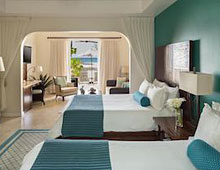 Hotel
Hotel 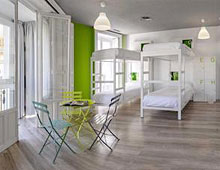 Budget accommodations
 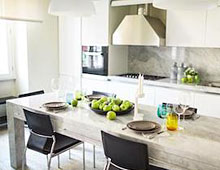 Apartments
  Family Hotel
 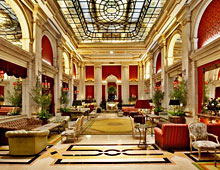 Luxury Hotel
  Resorts