B&B Hotel Cremona
Cremona - Via Antiche Fornaci 70
Book now

Cremona is a small yet elegant town nestled in the heart of the Po Valley, just a stone’s throw from the banks of the River Po. The city is world-renowned for being the birthplace of the celebrated violinist Antonio Stradivari, for its violin-making tradition and for its excellent nougat.
According to legend, the city was founded by Hercules, though history tells us that Cremona has been an important centre of the Po Valley since Roman times, boasting a significant port along the River Po. From here, moreover, began the Via Regina, a Roman road that connected Cremona with Chiavenna passing through Milan, and the Via Brixiana, a Roman consular road that linked Cremona’s port with Brescia.
Before becoming part of the Duchy of Milan, the city was long ruled by the Cavalcabò family, who undertook numerous projects in the town, including the bell chamber of the Torrazzo, the Romanesque church of S. Francesco and the Loggia dei Militi.
Today Cremona is a peaceful town in the Po Valley that has managed to preserve much of its historical heritage – elegant palaces, ancient churches and rich artistic works that make this place a true gem.

Cremona is a small but precious gem that is absolutely worth visiting if you find yourself in this part of Lombardy. It is not a particularly large town and the main sites of interest can be easily reached on foot while exploring its historic centre.
The heart of the city is the medieval Piazza del Comune, which hosts some of the main monuments including the Cathedral, the Torrazzo and the Loggia dei Militi.
The Cremona Cathedral, also known as the Basilica of Santa Maria Assunta, was built in the twelfth century in an area protected from potential flooding by the Po, which at that time flowed much closer to the city centre. Originally, two other churches stood here but were demolished to make way for a complex comprising the Cathedral, the Baptistery and the Torrazzo.
The main façade of the church, flanked by the Torrazzo, is clad in white Carrara marble and red Verona marble and features a large central rose window designed by Giacomo Porrata. The interior of the cathedral has three naves separated by massive pillars, and at the end of the central nave is a semicircular apse housing a fresco depicting the Redeemer.
The cathedral also contains other masterpieces of sculpture and painting, including the “Shrine of the Persian Martyrs”, created to house the relics of SS Mario and Marta and their sons Audiface and Abaco, who were originally from Persia and were martyred in Rome. The central nave also features other frescoes by Boccaccino, Bembo and Melone, depicting scenes from the life of Mary and the Passion of Christ.
The Baptistery of St John the Baptist stands right next to the Cathedral and was built between the eleventh and twelfth centuries. Standing 34 metres high, the building has an octagonal plan and is constructed in marble on some sides, while on others it is in terracotta. In the sixteenth century, the Baptistery was enriched with a loggia of pilasters in Romanesque style.
Inside, the religious building houses three altars and a large fourteenth-century crucifix. The object that attracts most attention, however, is the great cistern used by the bishop to bless water for distribution to the parishes. The cistern is made from a single block of red ammonitic stone from Sant’Ambrogio di Valpolicella (Verona) and was created in the sixteenth century by Lorenzo Trotti.
The Torrazzo of Cremona is a bell tower located right next to the Cathedral and is considered the symbol of the city. At 112.54 metres, this structure is regarded as one of Europe’s tallest medieval bell towers. A distinctive feature of this building is its double-shell construction, comprising two towers fitted one inside the other.
At the level of the fourth storey, you can admire a beautiful astronomical clock with a dial depicting the celestial vault with zodiacal constellations crossed by the motion of the Sun and Moon. With a diameter of 8.20 metres, this astronomical clock is considered one of the largest in the world.
Also in Piazza del Comune stands the Loggia dei Militi, a terracotta building constructed around 1292. This is where the “Società dei Militi”, an association comprising the city’s wealthiest citizens and representatives of the most important families, would meet. The Loggia was built in Lombard style, has a quadrangular floor plan and consists of two overlapping rectangular spaces.
On the ground floor is a portico housing a statue of two Hercules figures (according to legend, the city’s founder) supporting the city’s coat of arms. This monument is considered the symbol of Cremona.
The Town Hall, also known as Palazzo dei Ghibellini, was constructed at the beginning of the thirteenth century but underwent various enlargements and modifications from the fifteenth century onwards. In particular, the triforium windows of the façade were replaced by large windows, while the pilasters and terracotta decorations were added in the nineteenth century.
Inside, there was originally a single large assembly hall, but this was later subdivided into several rooms, which are now the Hall of Violins, the Consulta Hall and the Picture Gallery, which currently houses the Municipal Council.
The Violin Museum is an absolute must-see during a visit to Cremona, and not just for classical music enthusiasts. Inside you can admire various collections of bowed instruments including violins, violas, cellos and double basses made by Cremona luthiers such as Antonio Stradivari and Giuseppe Guarneri del Gesù. In addition to ancient and precious examples of musical instruments, you can also learn about the main equipment used in the creation of bowed instruments.
Music lovers should not miss the opportunity to visit the numerous luthier workshops found throughout the city. One of these has been reconstructed inside the Museum, whilst many others are located along the city streets and offer guided tours to discover this centuries-old craft, the tools used and the manufacturing techniques.
The Civic Museum Ala Ponzone is housed within Palazzo Affaitati, an elegant sixteenth-century building. The museum’s name derives from the Marquis Giuseppe Sigismondo Ala Ponzone, a local nobleman who, upon his death, bequeathed his art collections to the city.
The museum currently features more than two thousand works of paintings and sculptures, some created by great artists such as Caravaggio and Arcimboldo. There is also a Music Room containing truly ancient stringed instruments.
To learn more about Cremona’s history and traditions, you can visit the Museum of Rural Civilisation, which is housed in the farmhouse “Cambonino Vecchio”.
Here you can see what an ancient farmhouse was like, including the original stable, which contains objects used in livestock farming, as well as a collection of agricultural machinery. The farmworkers’ houses have been preserved to recreate the domestic environment of times past.
In the following map you can see the location of the main places of interest mentioned in this article.
You cannot leave Cremona without tasting its famous nougat. The city is internationally recognised as one of the historic birthplaces of nougat. Numerous craftspeople produce nougat following ancient traditional recipes and using only local ingredients.
During your visit to the city, make time to step into at least one of the many shops that produce and sell this delicious product. Among the most famous and historic ones in the old town centre are Sperlari and Vergari.
More affordable and less hectic than other major cities, Cremona boasts a wide range of hotels, bed and breakfasts and apartments to stay in. The best area to find accommodation is undoubtedly the historic centre, which allows you to reach the main sites of interest on foot. Cremona’s excellent location, situated between various cities of interest, makes it an ideal base for discovering other attractions in the area.
Cremona is easily accessible both by car and by train from the major cities in northern Italy. Those travelling by car from Milan can first take the A1 motorway and then the A21E70 until the Castelvetro exit. From here, you need to continue along the SS10 Padana Inferiore towards Cremona. Those coming from Brescia must also take the A21 until the Cremona exit.
Cremona has a railway station offering direct and rapid connections to various cities in northern Italy such as Milan, Lodi, Mantua and Brescia. The nearest airports are Milan Linate, approximately 95 km away, Bergamo Orio al Serio, 90 km away, and Parma, about 60 km away.
What's the weather at Cremona? Below are the temperatures and the weather forecast at Cremona for the next few days.


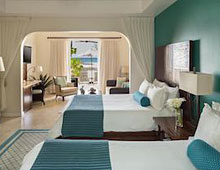 Hotel
Hotel 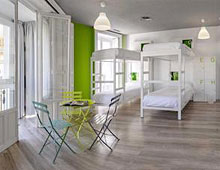 Budget accommodations
 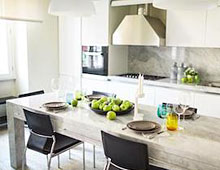 Apartments
  Family Hotel
 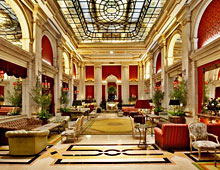 Luxury Hotel
  Resorts