Hotel Fioroni
Bellagio - Viale Domenico Vitali 2
Book now

Renowned as the “pearl of the lake” for its captivating scenery, Bellagio is a charming village nestled on the so-called Triangolo Lariano, the stretch of land between the two arms of Lake Como. Picturesque, elegant and refined – that’s how you might describe Bellagio, a small Lombard town that sits at the precise point where the lake divides into two, offering breathtaking views to all visitors. Thanks to its stunning natural scenery, Bellagio is one of the most coveted destinations on Lake Como.
The town’s geographical position blesses it with a mild, temperate climate – so favourable that the ancient Romans once cultivated olives and laurel here. In fact, the name Lake Lario, by which Lake Como is also known, derives from “laurus”, the Latin word for laurel. Today, Bellagio is an ideal spot for lakeside strolls admiring enchanting villas or walks immersed in pristine natural landscapes. The town is surrounded by towering peaks including Monte San Primo, Monte Palanzone and the Corni di Canzo.
The lake’s beauty has been appreciated since ancient times – the poet Virgil, after visiting the town, mentioned it in Book II of his Georgics. Senator Pliny the Younger, originally from Como, owned a villa in Bellagio where he spent his summers. Over the centuries, the town has maintained its timeless allure, captivating countless entrepreneurs, writers and famous personalities. Among them was American collector and entrepreneur Steve Wynn who, during a holiday here with his wife Elaine, fell so in love with the place that in 1998 he built a resort inspired by Bellagio in Las Vegas.

Once a small fishing bay, Bellagio has become a highly sought-after destination on Lake Como and has attracted not only musicians, actors and many illustrious figures over the years, but also couples seeking a romantic getaway. The historic centre of Bellagio, known as “il Borgo”, boasts numerous boutique shops, arcaded streets sheltering bars and restaurants, and many historic villas surrounded by parks and ancient gardens.
The heart of the town is Piazza Giuseppe Mazzini, where ferries arrive and depart on their Lake Como routes. From here, narrow cobbled streets radiate out, lined with historic buildings, small shops and ancient churches.
In the historic centre, it’s impossible not to notice the magnificent Villa Serbelloni, built in the XV century on the site of an old fortress. In the XVIII century, the property was acquired by the Serbelloni family, who enriched it with precious artworks. In 1930, the villa passed into the hands of Princess Ella Thurn und Taxis, who left it to the Rockefeller Foundation of New York upon her death. Over the centuries, the main building has been remodelled and expanded numerous times.
Currently, only the gardens are open to visitors, where you can wander along 18 km of pathways through verdant landscapes. From the villa, you can walk to the Cappuccini Convent and Villa Sfondrata, an elegant residence of the Lecco branch, built by the Sfondrati family. Villa Serbelloni remains the property of the Rockefeller Foundation, which hosts events and conferences there.
Built in the XIX century in neoclassical style by Francesco Melzi d’Eril, Villa Melzi sits on the western lakefront. The villa remains privately owned and is only partially open to visitors. What truly enchants all its guests is its beautiful park, featuring small lakes, gardens with centuries-old trees, exotic flowers and spectacular views over Lake Como.
Spring is undoubtedly the best time to visit when the flowers are in bloom. The grounds also house ancient artefacts, including two Egyptian sculptures from the XIII and XIV centuries BC and an Etruscan urn. Don’t miss the small museum, which displays numerous archaeological finds, or the neoclassical Chapel.
The Basilica of San Giacomo was built between the XI and XII centuries by the Maestri Comacini and is an excellent example of Comacine Romanesque architecture. The building is simple and austere, constructed in grey stone. The Basilica features three naves and a bell tower built during the XVI century.
Over the years, San Giacomo has undergone various modifications but has preserved many valuable artworks within. You can admire an archaic XII-century crucifix, a XV-century triptych by Foppa and a XVII-century canvas depicting the Martyrdom of St James of Argony.
One of Bellagio’s most striking panoramic terraces is Punta Spartivento, named because it’s the point where the lake divides into two branches: the Como and Lecco arms. From here you can admire distant villages dotting the lakefront and the mountain chains of the Lariana mountains that form a natural frame.
The best time to visit is at sunset, when the lake waters take on orange hues. There’s a bar-restaurant at Punta Spartivento where you can enjoy food or a drink with excellent views.
Not far from the Town Hall stands the small Church of San Giorgio, dating from the XI-XII century and featuring Lombard Romanesque style. Despite being remodelled over time, its original style remains evident.
Inside is a wooden statue of the Madonna della Cintura, depicting the Virgin handing her belt to a monk. The statue is one of Bellagio’s religious symbols and is carried in procession in September during the town’s festival.
In the small locality of Regatola, a hamlet of Bellagio, you can visit Villa Giulia, built around the XVII century. The property boasts Bellagio’s largest park, extending across both arms of Lake Lario and offering stunning views.
The complex was built by Count Pietro Venini, who named the residence after his wife Giulia. Over the centuries, the building has been owned by various illustrious figures including Count Blome of the Austrian House and King Leopold I of Belgium.
The entire area surrounding Bellagio is rich in trails and routes for hiking or cycling. From gentle paths suitable for families with children to more challenging and panoramic ones, outdoor enthusiasts will find plenty of excursions here.
One of the most interesting routes is the “Giro delle Frazioni“, a historic-nature itinerary that takes you through Bellagio’s various hamlets (Pescallo, Regatola, Guggiate, San Giovanni and Loppia) and lets you discover the history of these areas.
Bellagio offers its visitors a varied selection of accommodation options. Walking through its narrow streets, you’ll find not only splendid luxury hotels but also historic residences and intimate B&Bs. Prices in town are quite high, and staying here is often synonymous with a holiday of luxury and exclusivity.
The most sought-after accommodations are those offering lake views that let you wake up to stunning panoramas. Bellagio is the most famous town on Lake Como, so we recommend booking your accommodation well in advance.
There are many ways to reach Bellagio, but one of the most convenient (and scenic) is to arrive by ferry or hydrofoil. Bellagio is connected by lake to the main coastal towns, making it easy to reach by boat from towns like Como, Lecco, Menaggio and Varenna.
If you’re driving, be aware that parking is limited, so if you’re coming in high season, ensure your hotel has reserved spaces. From Milan, you can reach Bellagio by car in about 90 minutes via the SS 36 Lake Como and Spluga road. From Como, take the SP583.
Bellagio has no railway station, though the nearest is Varenna-Esino-Perledo, about 3 km away. The town is also served by local bus services connecting to main Lake Como towns. The nearest airports are Bergamo, about 60 km away, and Linate, roughly 70 km distant.
What's the weather at Bellagio? Below are the temperatures and the weather forecast at Bellagio for the next few days.
Bellagio is a charming Lombardy town situated on the shores of Lake Como, in an area known as the Larian Triangle. The town lies 70 km from Milan, 30 km from Como and 20 km from Lecco.


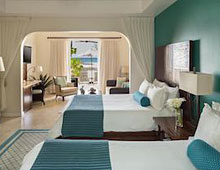 Hotel
Hotel 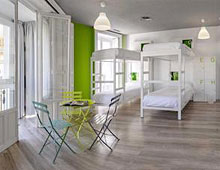 Budget accommodations
 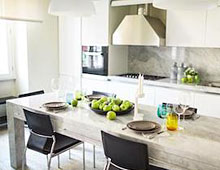 Apartments
  Family Hotel
 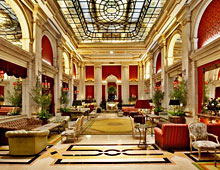 Luxury Hotel
  Resorts