Albergo Firenze
Como - Piazza Volta 16
Book now

Como is a charming lakeside town situated on the shores of Lake Lario, better known as Lake Como. The town sits directly on the border with Switzerland, particularly the Canton Ticino, and is a Lombardy destination that attracts visitors from around the world thanks to its beautiful historic centre and the natural heritage that surrounds it. Como lies along the western branch of Lake Como in a basin surrounded by tree-lined hills.
The town has remarkably ancient origins and was prized by the Romans for its strategic location, as it was one of two terminals of the Novaria-Comum road, which connected Novara with Como. Additionally, the Via Regina passed through here, linking the river port of Cremona with Chiavenna via Mediolanum (Milan). After being Visconti territory, Como’s history is closely tied to the fortunes of the Duchy of Milan and the Lombard-Venetian Kingdom.
Elegant and orderly, Como now presents itself as the ideal destination throughout the year and as a place that attracts numerous foreign visitors thanks to its charm. The town, beyond its important historic centre, is rich in historic palaces, ancient churches and splendid villas that often host luxury hotels and restaurants.

The town centre is truly evocative and sits right on the lake shore. The oldest part has managed to preserve its original layout as a Roman castrum over the centuries and is surrounded by medieval walls with large watchtowers. The heart of the town is undoubtedly Piazza del Duomo, home to the Cathedral of Santa Maria Assunta.
The Como Cathedral, also known as the Cathedral of Santa Maria Assunta, is considered one of the most important examples of late Gothic architecture in northern Italy. The Cathedral was built on the site where a church dedicated to Santa Maria Assunta already stood.
Construction began in the late 14th century but was only completed in the mid-18th century with the dome designed by Filippo Juvarra. The stepped façade is in late-Gothic style and was built in Musso marble with various sculptural decorations created by Giovanni Rodari’s workshop.
Inside, the Cathedral is laid out in the shape of a Latin cross, with three naves divided by two rows of pillars, and houses 16th-century paintings and tapestries from the 16th and 17th centuries executed in Ferrara, Florence and Brussels.
The Broletto was the ancient civic Town Hall and stands right next to Como Cathedral. The term Broletto derives from the Latin “brolo”, which indicated an open space where citizens gathered, and later the word came to mean the place chosen for civic assemblies.
The building was constructed in 1215 at the behest of podestà Bonardo da Cadazzo and a bell tower was erected against it, which was used to summon public assemblies. Unfortunately, the Broletto has been altered several times over the following centuries and has served various purposes. Over time the building was a theatre and a notarial archive, whilst now it is used by the council for events and as a venue for exhibitions.
Not many know that the great Italian physicist Alessandro Volta was born right here in Como. To celebrate the centenary of his death in 1917, businessman Francesco Somaini had a museum built in his honour along the shores of Lake Lario. This structure, shaped like a neoclassical temple, features a main body topped by a large dome.
The entrance is preceded by a portico where statues of Faith and Science stand. Inside, the site houses not only materials and documents on Volta’s research, but also reconstructions of his scientific instruments. In addition, there are portraits, sculptures, medals and personal objects of the Italian physicist.
The Basilica of Sant’Abbondio is a magnificent example of Lombard Romanesque architecture. The religious building was constructed outside the town walls in an area along the ancient Via Regina and is considered an important sacred site as Roman necropolises have also been found here.
Its construction dates back to the 11th century when it was built by Benedictine monks on the remains of an ancient early Christian church dedicated to Saints Peter and Paul. The new Basilica, however, was consecrated to Sant’Abbondio, an ancient bishop of Como, who had been buried here four centuries earlier.
Over the centuries Sant’Abbondio underwent various alterations that modified parts of its original appearance. Currently the Basilica features a façade in Moltrasio stone whilst inside it is divided by elegant columns into five naves. Inside you can admire a beautiful cycle of frescoes executed in the 14th century.
To enjoy a beautiful panorama of Lake Como and the surrounding areas, you can take the funicular railway that leads up to the small village of Brunate, which is considered the “balcony” overlooking Lake Lario.
From the moment you board the funicular, which takes about 7/8 minutes, you can admire the beautiful landscape that stretches from the lake to the Po Valley, and on fine days reaches the Alps with a particular view of Monviso and Monte Rosa.
Brunate is famous for its numerous villas in eclectic and liberty styles and also because numerous hiking trails and itineraries depart from here, allowing you to spend pleasant hours immersed in nature.
The Church of San Carpoforo was the first “cathedral” of Como until the Basilica of Saints Peter and Paul was built, which later became the Basilica of Sant’Abbondio. The religious building was constructed towards the end of the 4th century by San Felice, who had been appointed the city’s first bishop by Ambrose, then bishop of Milan.
According to history, the city’s first Christian community arose in this area and later became the object of fierce persecution by Roman emperors Maximian and Diocletian. The Basilica is dedicated to Carpoforo, one of six soldiers of the Theban Legion executed in Como around 303-305 for his faith.
The Basilica features three naves with the central nave covered by a timber roof and the side naves with cross vaults. According to recent studies, however, it appears that the two side naves were built at a later date than the central nave. Beneath the high altar, decorated in polychrome baroque marble, lies the ancient sarcophagus of San Felice, the bishop founder of the Basilica.
Villa Olmo is a neoclassical residence built by architect Simone Cantoni for the family of the Marquis Odescalchi of Fino Mornasco. The villa was built in 1780 at the behest of Marquis Innocenzo Odescalchi (1754-1824), who belonged to a branch of the illustrious family of the Odescalchi princes.
The marquis wanted a villa on the western shores of Lake Como as a residence where he could spend summer days and leisure time. For this reason, an expansive and elegant garden overlooking the lake was designed all around the main body of the villa.
According to an ancient story, the villa’s name is said to derive from a centennial elm tree that was present in this area at the time of the residence’s construction. The tree, however, was later cut down. Since 1924, the National Volta Centre has been housed within the villa, in tribute to Como’s famous citizen Alessandro Volta. Moreover, exhibitions are now regularly organised here.
The city walls built around Como are the result of the various dominions that characterised the town. First erected during the Roman period on the orders of Julius Caesar, the walls were part of a defensive structure that also included the Baradello Castle8 and the fortifications of Comacina Island.
The walls were built by the Romans to protect the Po Valley territories from potential invasions from the central Alps. Destroyed in the 12th century by the Milanese, the city walls were rebuilt in 1127 by Frederick Barbarossa and were subsequently enlarged and modified several times during both the Spanish dominion and the Napoleonic period.
The subsoil of Como has preserved over the centuries a wonderful Roman thermal complex in use from the second half of the 1st century AD until the end of the 3rd century. The baths appear to have been built thanks to Pliny the Younger, a senator of the Roman Empire of Cremonese origin, who wanted to give his city an important thermal centre. Over time the site was repeatedly enlarged and modified.
Excavations to discover the complex began in the 1970s and continued thereafter, bringing to light several rooms that were used as hot and cold chambers. It is now possible to visit the thermal site, thanks to a path built on walkways that leads to the discovery of the history of this centre.
In the following map you can see the location of the main places of interest mentioned in this article.

During a stay in the town it is impossible not to plan a tour of the beautiful Lake Como. Near Piazza Cavour you’ll find the dock where you can board one of the ferries that allow you to tour the lake. Once on board you can relax whilst admiring the surrounding landscape made up of splendid villas, magnificent gardens and small villages. It is also possible to purchase daily tickets that allow you to get on and off at your choice along the shores, exploring other beautiful locations.
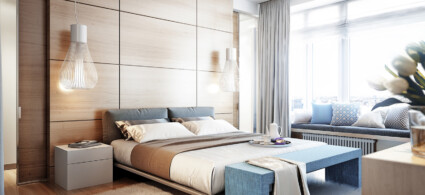
Como has become a highly sought-after tourist destination, with many foreign visitors coming mainly from the United States. Being very well-known, the town boasts a wide choice of accommodation that caters to the needs of different types of travellers. From hotels located in historic properties to more modern lodgings, from small B&Bs to apartments, there are also campsites and equipped camper areas.
The historic centre of the town offers various lodgings that allow you to reach the main places of interest on foot and find all services nearby. One of the most charming areas to stay in Como is certainly the lakeside promenade where you can enjoy truly stunning views.
Given the high tourist flows in the area, it is advisable to book your accommodation in advance so you can find the solution best suited to your needs.
Como is easily reachable by both car and train from major towns not only in Italy but also in Switzerland. Those travelling by car from Milan should first take the A8 and then the A9. From Milan you can also travel via the provincial road ex SS35 dei Giovi. From Varese, the town is reached via state road 342, whilst from Lecco by travelling first along SP639 and then along the SS36 del Lago di Como e dello Spluga.
The town has a railway station which offers connections to various Italian towns such as Milan, Monza, Varese and Lecco. You can also travel by train to and from Switzerland thanks to connections with various towns such as Lugano, Bellinzona, Mendrisio and Chiasso. Furthermore, the company Gestione Governativa Navigazione Laghi (GGNL) provides connections between Como and other towns on the shores of the lake such as Menaggio, Bellagio, Lecco, Varenna and Colico, via ferries or hydrofoils.
The nearest airports are Milan Malpensa, just over 50 km away, and Linate, about 60 km away. However, these airports are not directly connected to the town, but you need to first reach Milan central station and then take a train to Como.
What's the weather at Como? Below are the temperatures and the weather forecast at Como for the next few days.



 Hotel
Hotel  Budget accommodations
  Apartments
  Family Hotel
  Luxury Hotel
  Resorts