Hotel Sirmione Terme
Sirmione - Piazza Castello 19
Book now

Known as “the pearl of Lake Garda”, Sirmione is a captivating village nestled on a peninsula along the southern shores of Benaco. This charming town boasts a rich historical and archaeological heritage. Sirmione was inhabited since Roman times, as evidenced by the so-called “Grotte di Catullo”, an archaeological site that has preserved the remains of a Roman villa to the present day.
The other sites of interest in the town tell part of Sirmione’s story, as it was once considered an important military outpost first by the Veronese and later by the Venetians. Today, the town is renowned as a magnificent tourist destination on Lake Garda, not only for its numerous monuments and places of interest but also for its thermal waters.
The historic centre of Sirmione is a place steeped in history and charm. Surrounded by the waters of Lake Garda and lush vegetation, Sirmione has managed to preserve Roman remains from the Grotte di Catullo and various Early Medieval testimonies such as the Church of San Salvatore and the Scaligero Castle. The historic centre is truly on a human scale and is best explored on foot, wandering through its narrow streets lined with shops, boutiques and restaurants.

The Scaligero Castle in Sirmione is considered the symbol of the town and is one of its oldest buildings. The fortress was built in the 14th century by the Veronese Della Scala family, who ruled the city between 1259 and 1387, which is where its name “Rocca Scaligera” derives from.
The castle served as a defensive position for Verona’s territory and was erected at the southern access point to the town. Surrounded by the waters of Lake Garda, the fortress features three towers, all characterised by swallow-tail battlements, and a keep standing forty-seven metres high.
Over time, the fortification lost much of its strategic importance to the fortress of Peschiera and was subsequently used as a depot and then a barracks. Today, visitors can explore the gardens, the crenellated walkways, the dock and the tall tower, which offers a magnificent panoramic view of the lake and surrounding countryside.
Situated in a magnificent location on the shores of Lake Garda, the Grotte di Catullo preserve the remains of a Roman villa built between the late 1st century BC and the 2nd century AD. The term “Grotte” (caves), by which the site was named at the time of its discovery, stems from the initial belief that it was a cavern.
According to various studies, this residence was actually owned by Gaius Valerius Catullus, a Roman author who also described his home in one of his works. The complex extends over approximately two hectares and the villa has a rectangular layout measuring 167 metres long with two wings and a central courtyard now planted with olive trees. A visit to the Grotte di Catullo is fascinating not only from an archaeological perspective but also as a location from which to admire a beautiful view of the lake.
The site also houses the archaeological museum of Sirmione, where you can admire objects discovered in the area that tell part of Sirmione’s and Lake Garda’s history. The objects on display span from the Roman period through to the medieval era.
The Church of San Pietro in Mavino stands at the highest point of the town and is considered Sirmione’s oldest religious building. The earliest records of the church date back to the 8th century AD during the Lombard period, though the building was rebuilt in the 14th century.
Currently, the church features a rectangular layout with three apses and a timber roof structure. Inside, it houses works of considerable artistic value, including a 14th-century Madonna enthroned with the Christ Child and Saints, as well as 16th-century frescoes adorning the walls.
Also known as the Church of Santa Maria Maggiore, Santa Maria della Neve is a religious building located in Sirmione’s historic centre. The church was built in the 15th century on the site of a previous religious structure, much of whose material was reused in its construction.
The entrance façade is adorned with terracotta and features a portico with five arches, whilst inside the church has a single nave and five altars. The interior is decorated with splendid frescoes and a 15th-century wooden statue of the Madonna.
Palazzo Maria Callas was built in the 17th century on Piazza Giosuè Carducci, in Sirmione’s historic centre. The building was dedicated to the renowned opera singer Maria Callas, who lived in Sirmione for many years and is remembered in the town through monuments and various musical initiatives. Currently, the palazzo, which spans approximately 400 square metres, hosts exhibitions, shows and conferences.
Villa Meneghini-Callas was built by the Giannantoni family of Lombard industrialists, who later sold the property to entrepreneur Giovanni Battista Meneghini. Meneghini, husband of Maria Callas, purchased the property in the 1950s as a holiday retreat with his wife, who loved the lake. Today, the residence can only be admired from the outside, where a plaque commemorates both Maria Callas and Giovanni Meneghini.
Since the 19th century, it has been known that Sirmione’s waters possess important preventative, therapeutic and rehabilitative properties. The presence of sulphurous, saline, bromine and iodine thermal water in the area is linked to the discovery of the ancient Boiola spring.
This has made Sirmione a highly sought-after destination for those seeking thermal treatments. Today, the town boasts several hotels and thermal centres offering not only therapeutic activities but also wellness programmes featuring thermal and aesthetic treatments, massages, detoxifying and relaxation therapies.
Not everyone knows that on Sirmione’s shores along Lake Garda, you can find small yet enchanting beaches for relaxation. One of the most beautiful and unspoilt stretches of coast is certainly Jamaica Beach, located near the historic centre, just beyond the more famous Lido delle Bionde.
There is no traditional sandy beach here, but rather large stone slabs where you can sunbathe in complete peace. This stretch of coast is bathed by turquoise-coloured waters reminiscent of the Caribbean, hence the name “Jamaica Beach”. The beach can be reached by boat or via a truly scenic walking path that runs alongside Scaligero Castle.
Hospitality and warmth are hallmarks of Sirmione, making it an ideal destination not only for a relaxing weekend but also as a base for exploring Lake Garda. The town boasts various types of accommodation, including hotels, bed and breakfasts, holiday homes and campsites, located both along the shores of the lake and inland. Particularly during the summer season, Sirmione is a highly popular destination, so we recommend booking well in advance for your stay.
You can reach Sirmione by car or by public transport, such as bus, train or ferry.
By car, you can reach Sirmione via the A4 Turin-Trieste motorway, exiting at the Sirmione junction. If you’re coming from Peschiera del Garda, you can take the SR11 bypass with the exit for Sirmione.
Sirmione does not have a railway station, but the nearest ones are Desenzano del Garda and Peschiera del Garda, both on the Milan-Venice railway line and served by regional trains, intercity services and high-speed trains. From these stations, you can reach Sirmione by bus or taxi.
Alternatively, you can reach Sirmione by ferry via services connecting the various towns on Lake Benaco.
The nearest airports are Verona’s Catullo airport, 35 km away, and Bergamo’s Orio al Serio airport, 90 km away.
What's the weather at Sirmione? Below are the temperatures and the weather forecast at Sirmione for the next few days.
Sirmione is a charming town in the province of Brescia, located on the southern shore of Lake Garda, bordering the provinces of Mantua and Verona. The town lies 10 km from Desenzano del Garda, 90 km from Bergamo and 130 km from Milan.


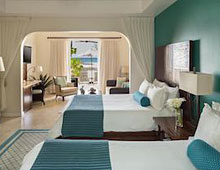 Hotel
Hotel 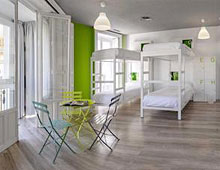 Budget accommodations
 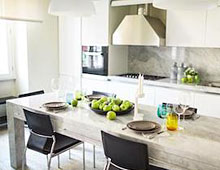 Apartments
  Family Hotel
 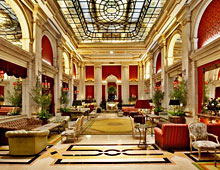 Luxury Hotel
  Resorts