Palace Hotel Desenzano
Desenzano del Garda - Viale Francesco Agello 114/A
Book now

Desenzano del Garda is a delightful lakeside town nestled on the southern shores of Lake Garda. Sunny and picturesque, Desenzano is characterised by narrow alleyways that lead visitors through its charming historic centre, which boasts sites of historical and archaeological significance. A stroll through its winding streets allows you to savour the Lake’s unique microclimate, discover an exceptional cultural heritage and sample the region’s outstanding local food and wine traditions.
The town’s enviable position offers a mild, temperate climate, whilst the combination of Lake Garda on one side and lush Mediterranean vegetation on the other creates a captivating landscape that enchants all who visit. For these reasons, Desenzano has become a much sought-after destination not only for Italians but also for international visitors drawn by its harmonious blend of history, nature and relaxation.

The beating heart of the town is undoubtedly Piazza Giuseppe Malvezzi, the main civic square, which was built in the sixteenth century by architect Giulio Todeschini, who also designed the Cathedral.
The square is dedicated to partisan Giuseppe Malvezzi, who was killed here by Nazi-Fascist forces in 1945 along with eight fellow resistance fighters. Piazza Malvezzi is lined with cafés, restaurants and arcades housing boutiques, and it’s undeniably the best starting point for exploring the town.
The Cathedral of Desenzano del Garda is the town’s principal place of worship, built in the seventeenth century by Italian architect Giulio Todeschini. Dedicated to Santa Maria Maddalena, the building features an elegant Baroque façade.
Inside, the church boasts a three-naved basilica layout and stands as one of the finest examples of late Brescian Renaissance architecture. It houses remarkable artworks including a celebrated canvas depicting The Last Supper by Venetian painter Gian Battista Tiepolo and several frescoes by Andrea Celesti.
The town’s castle is Desenzano’s most iconic landmark, built during the medieval period, likely upon the remains of an earlier Roman fort. Originally constructed as a defensive fortress, the complex sits atop a small hill overlooking the harbour and surrounding territory.
In the fifteenth century, the fort was enlarged and partially modified not only to continue serving as a refuge for the local population but also to garrison military forces. The present castle, with its irregular rectangular layout and tower positioned near the entrance, is therefore not the original structure. Today the fortress is open to visitors, and climbing the keep rewards you with a spectacular vista over Lake Benaco and the surrounding countryside.
In 1921, excavations for a new house uncovered the remains of a Roman-era villa, believed to be one of northern Italy’s oldest examples. Built around the first century BC, the villa boasts over 240 square metres of stunning polychromatic mosaics depicting hunting scenes, racing chariots, cherubs, maenads and satyrs.
Don’t miss a visit to the Antiquarium, where the most significant artefacts discovered in the area are displayed. The museum also contains evidence relating to Flavius Magnus Decentius, the villa’s owner and brother of Emperor Magnentius, from whom the town’s name “Desenzano” is said to derive.
One of Desenzano’s most evocative and picturesque spots is its historic waterfront. The old harbour was built during the Venetian Republic as a landing point for food supplies and merchandise, later modified with the construction of a Venetian-style bridge.
Overlooking the harbour stands Palazzo Todeschini, once the town hall. Nearby is the Desenzano Lighthouse, built in the nineteenth century as a navigation aid for ships.
The Archaeological Museum of Desenzano is housed in the former Carmelite Monastery and is dedicated to Giovanni Rambotti, the nineteenth-century mayor who championed the study of archaeological finds unearthed in the area.
The museum displays artefacts from the Palaeolithic, Mesolithic and Neolithic periods, though the most significant piece is undoubtedly a wooden plough. The so-called Plough of Lavagnone is believed to belong to the Polada culture and dates to the early Bronze Age (2000 BC).
As a lakeside resort, Desenzano boasts beautiful, relaxing beaches perfect for sunbathing. The four main shorelines are Spiaggia del Desenzanino, Spiaggia Feltrinelli, Spiaggia d’Oro and Spiaggia di Rivoltella, all largely pebbly with clear, cool waters. The beaches feature kiosks and bars where you can purchase food and refreshments.
Desenzano del Garda offers a wide range of accommodation options to suit any visitor. The town benefits from excellent accessibility, with easy access to the A4 motorway exit, quality hospitality facilities and a railway station.
The best areas to stay are the historic centre, near Piazza Malvezzi, or the lakeside promenade, where you can enjoy breathtaking views. In addition to traditional hotels and small bed-and-breakfasts, you’ll find elegant spa hotels and luxurious boutique properties.
Desenzano del Garda is easily accessible by car, train or boat. If you’re driving, whether arriving from the west (Milan, Turin) or east (Venice), take the A4 motorway to the Desenzano del Garda exit. Visitors from the Venetian shore of Lake Garda (such as Lazise or Peschiera del Garda) should take the SR11 road.
The town also has a railway station on the Milan-Venice line, served by regional and long-distance trains connecting Desenzano with several towns in both Veneto and Lombardy.
Alternatively, you can reach the town by boat across the lake, with ferry services linking Desenzano to towns including Sirmione, Lazise, Bardolino and Salò. The nearest airports are Verona’s Valerio Catullo airport, approximately 35 km away, and Bergamo Orio al Serio airport, around 77 km distant.
What's the weather at Desenzano del Garda? Below are the temperatures and the weather forecast at Desenzano del Garda for the next few days.


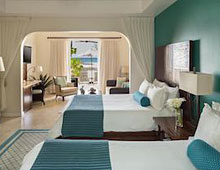 Hotel
Hotel 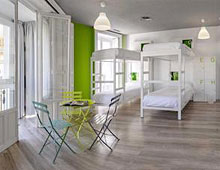 Budget accommodations
 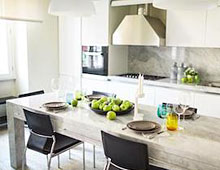 Apartments
 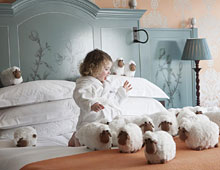 Family Hotel
 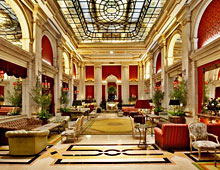 Luxury Hotel
 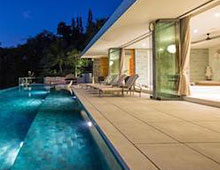 Resorts